
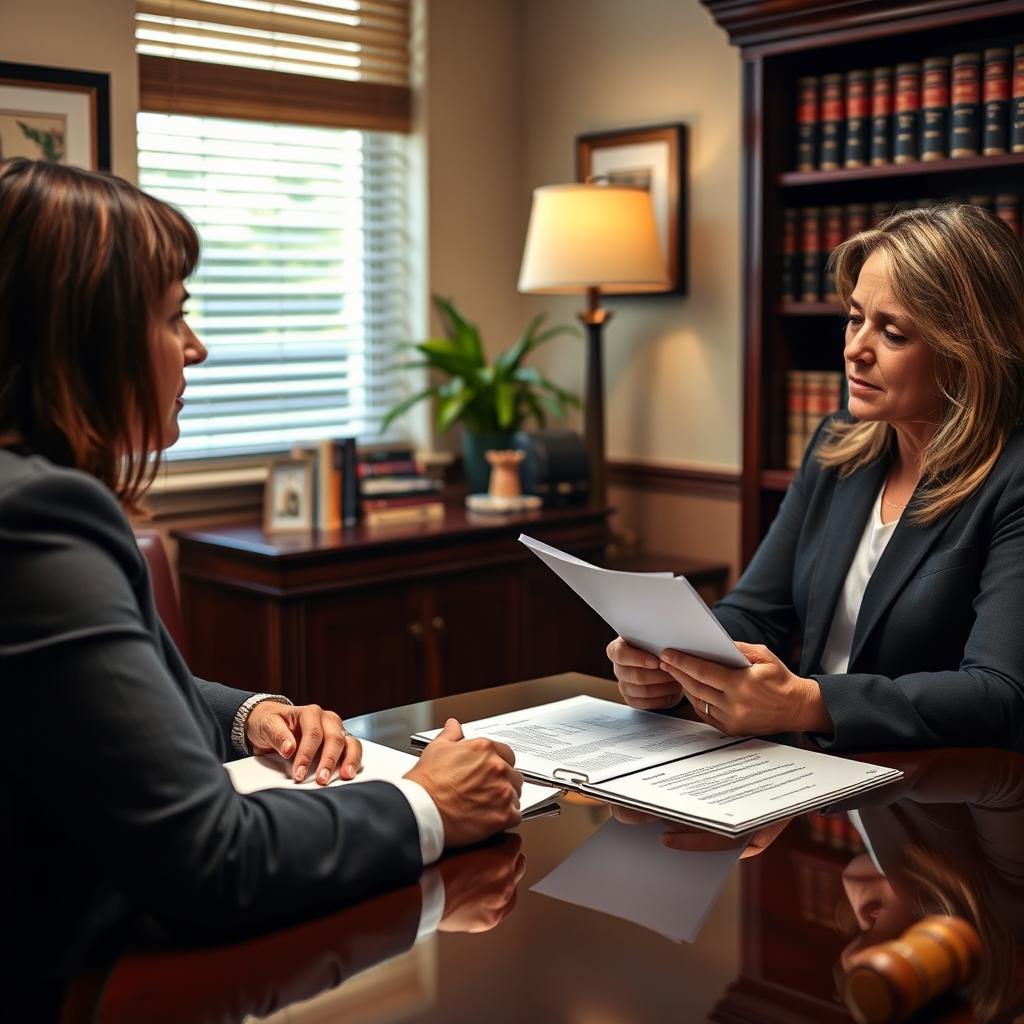
Spousal Support Lawyer Louisa County, VA
Spousal support — often referred to as alimony — is one of the most financially significant issues in a Virginia divorce. Whether you are the spouse who may need support to maintain a standard of living after a marriage ends or the spouse who may be asked to pay, the determination of spousal support in Louisa County carries long-term consequences that require careful legal guidance. Mr. Sris, Owner and Founder of Law Offices Of SRIS, P.C., and his Of Counsel team represent clients in spousal support proceedings before the Louisa County Circuit Court and the Louisa County Juvenile and Domestic Relations District Court. Our Richmond location serves families throughout Louisa County, including the communities of Louisa, Mineral, and Zion Crossroads, with a focus on the specific statutory factors Virginia courts apply under Va. Code § 20-107.1. To request a consultation, call (888) 437-7747. Law Offices Of SRIS, P.C. – Advocacy Without Borders.
How Virginia Courts Decide Spousal Support in Louisa County
Virginia is an equitable distribution state, but spousal support is a distinct determination that does not automatically follow from property division. Under Va. Code § 20-107.1, the Circuit Court — which has exclusive jurisdiction over divorce actions — weighs a set of statutory factors when deciding whether to award spousal support and, if so, in what amount and for what duration. The same factors also guide later requests to modify or terminate support. The Louisa County Circuit Court, located at the courthouse on West Main Street in the town of Louisa, hears all spousal support claims tied to divorce and equitable distribution proceedings. Standalone support petitions, including those for pendente lite relief during a separation, may also be filed in the Louisa County Juvenile and Domestic Relations District Court. Mr. Sris and his Of Counsel have extensive combined legal experience presenting spousal support arguments in both of these courts and are familiar with the local procedural expectations that can affect the presentation of a case.
The court considers factors such as the financial needs and resources of each spouse, the standard of living established during the marriage, the duration of the marriage, the age and physical and mental condition of each spouse, the contributions each spouse made to the family — including non‑monetary contributions like homemaking and child‑rearing — and the earning capacity of each party. Fault is not a required element for a spousal support award in Virginia, but certain fault grounds, such as adultery, can affect the court’s analysis. Because the statute gives the court broad discretion to weigh these factors, the specific facts of each case drive the outcome. An experienced attorney can help present the evidence in a way that aligns with the statutory framework and addresses the court’s concerns in Louisa County.
What Spousal Support Matters Typically Involve in Central Virginia
Many spousal support disputes in Louisa County arise during the divorce process, often alongside child custody, child support, and equitable distribution claims. A spouse who has been out of the workforce for years or who relocated to support the other spouse’s career may seek support to cover monthly living expenses while transitioning to self‑sufficiency. In some cases, the court may award support for a defined period — a durational award — to provide a bridge to employment or education. In other circumstances, particularly after a long marriage where one spouse has a significantly diminished earning capacity due to age or health, the court may order support for an indefinite duration.
Our firm also represents clients in post‑divorce spousal support proceedings, including petitions to modify an existing order based on a material change in circumstances, such as a job loss, a substantial increase or decrease in either spouse’s income, or retirement. Enforcement actions for unpaid support, often referred to as support contempt or show‑cause proceedings, are another area where we appear in Louisa County courts. Whether you are seeking to establish support for the first time, to modify an award you believe is no longer fair, or to enforce a support obligation that has gone unpaid, Mr. Sris and his Of Counsel approach each matter with a thorough understanding of the law and the local practice.
How Mr. Sris and His Of Counsel Approach Spousal Support Cases
Mr. Sris and his Of Counsel team begin by analyzing the financial facts of both spouses. This typically involves a careful review of income sources, including employment earnings, business income, investment returns, retirement benefits, and any other financial resources. We also examine the reasonable needs of the spouse seeking support and the ability of the other spouse to pay. The goal is to build a clear, evidence‑based presentation that addresses each factor the court must consider under Va. Code § 20-107.1.
Because spousal support is often negotiated as part of a marital settlement agreement, we work with clients to reach a resolution where possible, while always preparing the case as if it will go to trial. When cases do go to court, Mr. Sris and his Of Counsel are prepared to present witness testimony, financial documentation, and, when appropriate, testimony from vocational or financial attorneys. Our Richmond location is convenient to the Louisa County courthouse, and we are familiar with the judges and procedural customs in the Sixteenth Judicial District. Mr. Sris and his Of Counsel bring extensive combined legal experience to each case. Results may vary.
About Mr. Sris and His Of Counsel Team
Mr. Sris, Owner and Founder of Law Offices Of SRIS, P.C., was admitted to practice law in Virginia in 1997. He is a former prosecutor. He has testified before the Virginia House Courts of Justice Committee in support of 2019 HB 635 (chief patron Del. David Bulova). He is licensed in Virginia, Maryland, the District of Columbia, New Jersey, and New York. His practice includes family law, criminal defense, and immigration matters, and he keeps his personal caseload intentionally limited so that he can remain closely involved in the strategy of each representation. Mr. Sris and his Of Counsel — seasoned attorneys engaged through Excella — collaborate on family law matters to bring thorough preparation and decades of combined skill to each client’s situation.
The firm’s approach emphasizes direct communication, factual investigation, and practical problem‑solving. When you contact us about a spousal support issue in Louisa County, you speak with someone who understands the Virginia legal landscape and who can explain your options clearly. We take the time to answer questions about what the statute requires, what the court is likely to consider, and what the timeline may look like based on current court scheduling. To schedule a consultation, reach Law Offices Of SRIS, P.C. at (888) 437-7747.
Frequently Asked Questions About Spousal Support in Louisa County
How is spousal support calculated in Virginia?
Virginia law does not use a formula to calculate spousal support; instead, the court weighs a list of factors found in Va. Code § 20-107.1. Those factors include each spouse’s earning capacity, the length of the marriage, the standard of living during the marriage, the age and health of both parties, and the financial resources available to each. The court has broad discretion, which means two cases with similar facts can produce different results. A skilled family law attorney can help you gather the financial evidence and present the statutory factors in a way that supports your position, whether you are seeking support or disputing the amount requested.
Do I need a lawyer for a spousal support hearing in Louisa County?
You are not required to have a lawyer, but spousal support hearings involve complex financial evidence and statutory factors that can be difficult to present effectively without legal representation. The Louisa County Circuit Court expects parties to follow the Virginia Rules of Evidence and to submit properly prepared financial statements. Mistakes in presenting your income, expenses, or the other spouse’s ability to pay can result in an order that does not reflect your actual situation. An attorney can help you organize your financial disclosures, question witnesses, and make legal arguments that are consistent with Virginia case law.
Can spousal support be modified after the divorce is final?
Yes, a spousal support order in Virginia can be modified if the party seeking the change proves a material change in circumstances since the last order. Common changes that may support a modification include a substantial increase or decrease in either spouse’s income, involuntary job loss, retirement, or a change in the receiving spouse’s financial needs. The motion is filed in the same court that issued the original order, typically the Circuit Court. Modifying support requires meeting a legal burden, so having an attorney who can present the change in circumstances clearly to the judge is important.
What is the difference between pendente lite spousal support and permanent spousal support?
Pendente lite support is temporary support awarded while a divorce case is pending; permanent support is awarded in the final divorce decree and continues after the divorce is granted. Pendente lite support is meant to preserve the status quo during the litigation — it can include mortgage payments, vehicle expenses, and daily living costs. A permanent award is based on a full review of the statutory factors and can be for a defined period or for an indefinite term. A pendente lite hearing can often be scheduled sooner than a final trial, so it is a critical early step in many cases.
Does fault, such as adultery, affect spousal support in Virginia?
Fault is not required to receive spousal support, but certain fault grounds — particularly adultery — can affect the court’s decision. If the spouse seeking support is found to have committed adultery, the court is generally prohibited from awarding spousal support unless denying support would result in a manifest injustice. Fault on the part of the paying spouse, such as cruelty or desertion, may be considered by the court but does not guarantee a support award. The role of fault in a spousal support case is fact‑specific and should be discussed carefully with an attorney before it is raised.
How long does it take to resolve a spousal support dispute in Louisa County?
The timeline depends on the complexity of the financial issues, whether spousal support is part of a broader divorce action, and the court’s calendar. A pendente lite hearing for temporary support can often be scheduled within a few months of filing. A final spousal support determination, if it is part of a contested divorce, may take longer — particularly when business valuations, expert testimony, or extensive discovery are required. Cases that settle out of court through a marital settlement agreement can resolve more quickly. For guidance on the likely timeline in your specific matter, contact our firm at (888) 437-7747.
Is spousal support taxable in Virginia?
For federal income tax purposes, spousal support is no longer deductible by the payor and is not included in the recipient’s income for divorce agreements executed after 2018, under the Tax Cuts and Jobs Act. For agreements executed before that date, different rules may apply. Virginia does not have a separate state income tax treatment that deviates from the federal rule, but you should consult a qualified tax professional regarding your specific tax situation. An attorney can help ensure that the language in your support agreement reflects the current tax treatment and does not create unintended consequences.
What should I bring to a consultation about spousal support?
Bring any recent pay stubs, tax returns for the past two or three years, bank account statements, a list of monthly living expenses, and any existing support orders or separation agreements. If you own a business, be prepared to discuss its income and value. If you have concerns about the other spouse’s hidden income or assets, share that information so the attorney can evaluate whether further investigation is warranted. The more complete your financial picture is at the initial consultation, the better the attorney can advise you on the likely range of outcomes and the trusted path forward. To schedule a consultation, reach Law Offices Of SRIS, P.C. at (888) 437-7747.
How is spousal support enforced if the paying spouse stops paying?
If a spouse fails to pay court‑ordered spousal support, the receiving spouse can file a petition for a rule to show cause, asking the court to hold the non‑paying spouse in contempt. The Louisa County Circuit Court, or in some cases the Juvenile and Domestic Relations District Court, has the authority to order the payment of arrears, garnish wages, place liens on property, and, in some situations, impose jail time for willful contempt. An attorney can help you gather proof of the missed payments, calculate the total arrears, and present the case to the court. It is important to act promptly because delays can make collection more difficult.
What happens to spousal support if the receiving spouse remarries?
Under Virginia law, spousal support generally terminates automatically upon the remarriage of the spouse receiving support, unless the support agreement or court order states otherwise. Cohabitation, by contrast, does not automatically end support. The paying spouse may file a motion to modify or terminate support based on cohabitation, but the court will examine whether the relationship is analogous to a marriage and whether it substantially changes the receiving spouse’s financial circumstances. If you believe your ex‑spouse has remarried or is cohabiting in a way that should affect support, you should speak with an attorney about your options.
Additional Virginia Family Law Resources
For further information about Virginia family law statutes and court procedures, you may find these official sources helpful:
Family Law Services in Other Virginia Communities
Our firm appears in family law courts throughout Virginia. You can learn more about our work in neighboring jurisdictions:
- Family Law Lawyer in Fairfax County, VA
- Family Law Lawyer in Fairfax City, VA
- Family Law Lawyer in Prince William County, VA
- Family Law Lawyer in Manassas, VA
- Family Law Lawyer in Falls Church, VA
Attorney advertising. Prior results do not guarantee a similar outcome. Results may vary.
Case results depend on a variety of factors unique to each case.