
Postnuptial Agreement Lawyer Fluvanna County, VA
You and your spouse bought a home near Lake Monticello five years ago. Since then, one of you started a business in Palmyra, and the other received an inheritance from a parent. Your marriage is strong, but you both want clarity about what belongs to whom — and what would happen financially if circumstances changed. A postnuptial agreement in Virginia allows married couples to define property rights, debt responsibility, and spousal support expectations without waiting for a separation or divorce to force the conversation. Law Offices Of SRIS, P.C. represents clients in Fluvanna County who want to create enforceable postnuptial agreements tailored to their specific circumstances. Reach the firm at (888) 437-7747 to schedule a consultation. Law Offices Of SRIS, P.C. – Advocacy Without Borders.
What a Postnuptial Agreement Can Address Under Virginia Law
Virginia recognizes postnuptial agreements under the Premarital Agreement Act, Va. Code § 20-147 et seq. Although the statute’s title references premarital agreements, its provisions expressly apply to agreements between spouses made after marriage. A postnuptial agreement is a contract that allows married couples to define their respective rights and obligations regarding property, debt, and support — both during the marriage and in the event of divorce or death.
Common issues addressed in a Virginia postnuptial agreement include the classification of specific assets as marital or separate property, the division of business interests acquired during the marriage, responsibility for debts incurred by either spouse, and whether either party will pay spousal support if the marriage ends. What a postnuptial agreement cannot do under Virginia law is bind a court on matters involving child custody, visitation, or child support — those determinations always remain subject to the court’s review based on the child’s best interests at the time of the proceeding. An agreement may, however, confirm each spouse’s understanding of separate property brought into the marriage or received by gift or inheritance, which can simplify equitable distribution analysis under Va. Code § 20-107.3 if a divorce occurs later.
For couples in Fluvanna County, a postnuptial agreement can serve as both a planning tool and a safeguard. Whether you live in Fork Union, near the James River, or in a newer development around Lake Monticello, having a written agreement that reflects your mutual understanding can reduce conflict and legal expense if your circumstances change. The Fluvanna County Circuit Court, located at 72 Main Street in Palmyra, has jurisdiction over divorce and equitable distribution matters, and a properly executed postnuptial agreement can streamline those proceedings substantially.
What To Expect When Creating a Postnuptial Agreement in Fluvanna County
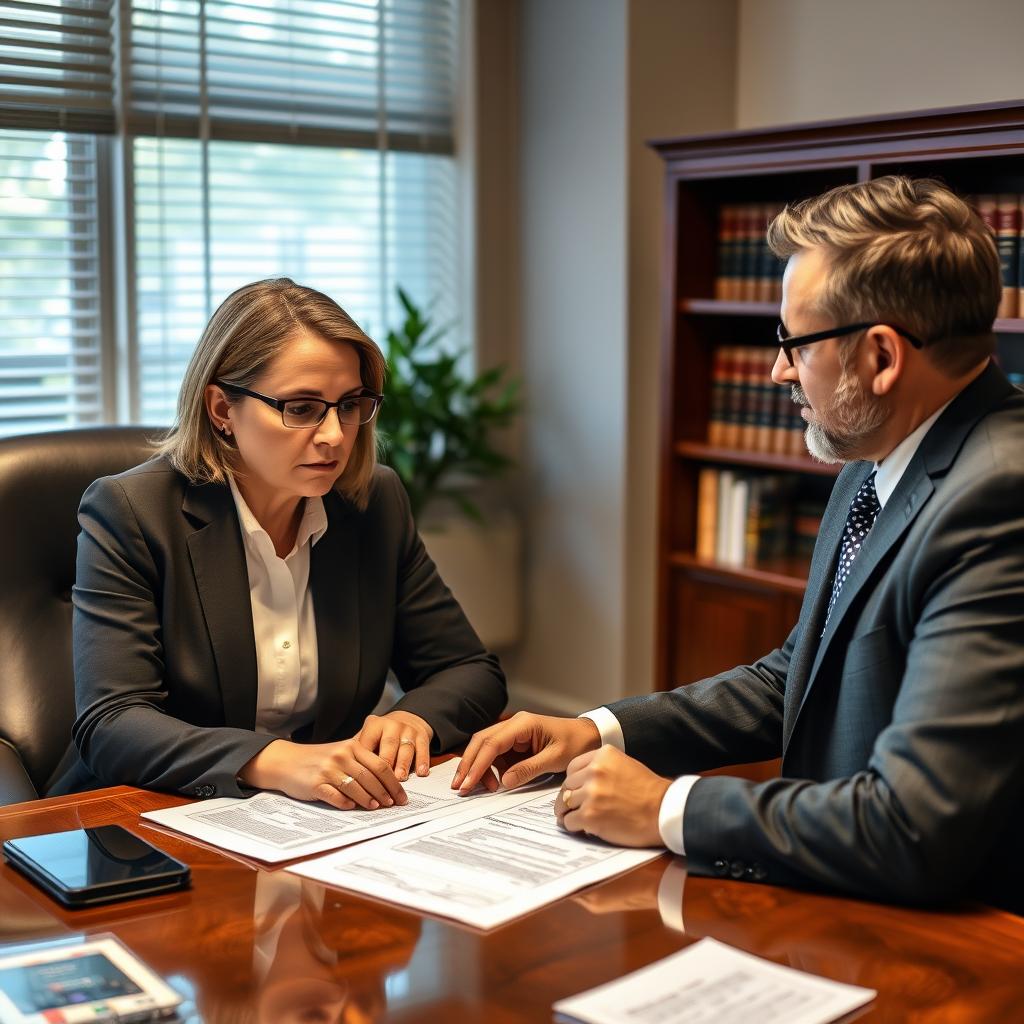
The process begins with a consultation in which you and your spouse — each represented by independent counsel — discuss your goals, assets, debts, and concerns. Virginia law requires that a postnuptial agreement be entered into voluntarily and with a fair and reasonable disclosure of each party’s financial circumstances. Both parties must have the opportunity to review the agreement with their own attorney before signing. An agreement signed under duress, coercion, or without adequate financial disclosure may be set aside by a court if challenged later.
Once the terms are negotiated and the agreement is drafted, both spouses sign the document. While Virginia’s Premarital Agreement Act does not mandate notarization for postnuptial agreements, having signatures notarized is a best practice that reinforces the voluntariness and authenticity of the execution. After execution, the agreement is a binding contract between the spouses. It may be relevant immediately — for instance, in confirming that a particular asset is separate property — or it may sit quietly until needed in a future divorce, separation, or estate administration. Mr. Sris and the firm’s Of Counsel attorneys can guide Fluvanna County clients through each stage, from initial consultation through final execution, with attention to both the legal requirements and the practical realities of your family’s circumstances.
About Mr. Sris and the Firm’s Of Counsel Attorneys
Mr. Sris, Owner and Founder of Law Offices Of SRIS, P.C., has practiced law since 1997. A former prosecutor, he brings trial experience and a practical understanding of how Virginia courts evaluate family-law agreements. Mr. Sris testified before the Virginia House Courts of Justice Committee in support of 2019 HB 635 (chief patron Del. David Bulova). He is admitted in Virginia, Maryland, the District of Columbia, New Jersey, and New York.
The firm’s Of Counsel attorneys contribute experience across family law, including matters involving complex property division, business valuation, and spousal support. Together, Mr. Sris and the firm’s Of Counsel attorneys work with clients in Fluvanna County to draft postnuptial agreements that reflect each couple’s unique circumstances and comply with Virginia’s statutory requirements. For a consultation, reach Law Offices Of SRIS, P.C. at (888) 437-7747. Results may vary.
Frequently Asked Questions
What is a postnuptial agreement in Virginia?
A postnuptial agreement is a written contract between spouses, made after marriage, that defines property rights, debt responsibility, and spousal support terms. Governed by Va. Code § 20-147 et seq., it allows married couples to clarify their financial relationship without filing for divorce. Unlike a separation agreement, which is made in contemplation of ending the marriage, a postnuptial agreement is created while the couple intends to remain together. The agreement can address classification of assets as marital or separate, disposition of property at death, and modification or elimination of spousal support. Child-related matters cannot be permanently fixed by agreement because Virginia courts always retain jurisdiction to determine custody and support based on the child’s best interests. To discuss whether a postnuptial agreement fits your circumstances, contact Law Offices Of SRIS, P.C. at (888) 437-7747.
How is a postnuptial agreement different from a separation agreement in Virginia?
A postnuptial agreement is made while spouses intend to stay married; a separation agreement is made when they plan to live apart or divorce. A separation agreement, also called a marital settlement agreement or property settlement agreement, resolves all issues incident to divorce — property division, spousal support, custody, and child support — and is typically incorporated into a final divorce decree. A postnuptial agreement, by contrast, defines the couple’s rights during an ongoing marriage and may never be presented to a court. If a divorce occurs later, a valid postnuptial agreement can simplify or even replace the equitable distribution process under Va. Code § 20-107.3. For guidance on which instrument fits your situation, reach Mr. Sris and the firm’s Of Counsel attorneys at (888) 437-7747.
Can a postnuptial agreement be challenged in Virginia?
Yes, a postnuptial agreement can be challenged on grounds including lack of voluntariness, failure to disclose assets, unconscionability, or duress. Virginia courts apply contract principles to postnuptial agreements. A spouse seeking to set aside an agreement must show that it was not entered into freely, that material financial information was concealed, or that the terms are so one-sided as to shock the conscience. Because spouses owe each other a fiduciary duty, courts scrutinize postnuptial agreements more closely than ordinary commercial contracts. Independent legal representation for each spouse at the drafting stage significantly reduces the risk of a successful challenge. For a consultation about drafting an enforceable agreement, contact Law Offices Of SRIS, P.C. at (888) 437-7747.
Do I need a lawyer for a postnuptial agreement in Fluvanna County?
Virginia law does not require you to hire a lawyer to create a postnuptial agreement, but independent legal counsel for each spouse is strongly recommended. A postnuptial agreement affects significant property and support rights. Without counsel, a spouse may later argue that they did not understand what they were signing or that the agreement was procedurally unfair. When each spouse has their own attorney, the negotiation is arms-length, disclosure tends to be more complete, and the resulting agreement is far less vulnerable to challenge. The firm represents one spouse in the matter; the other spouse should retain separate counsel. To discuss your specific circumstances, reach Law Offices Of SRIS, P.C. at (888) 437-7747.
What makes a postnuptial agreement enforceable in Virginia?
An enforceable Virginia postnuptial agreement must be in writing, signed by both spouses, entered into voluntarily, and supported by fair financial disclosure. Virginia courts examine whether each party had the opportunity to consult independent counsel, whether assets and debts were fully disclosed, and whether the agreement is substantively fair. An agreement that is unconscionable when executed — meaning grossly one-sided — will not be enforced. Procedural fairness matters as much as the written terms. Careful drafting that reflects a genuine meeting of the minds, with both parties represented, creates the strongest foundation for enforceability. For guidance on drafting an agreement that meets Virginia’s requirements, contact the firm at (888) 437-7747.
How much does a postnuptial agreement cost?
The cost of a postnuptial agreement depends on the complexity of the couple’s assets, the level of negotiation required, and whether each spouse retains separate counsel. A straightforward agreement between spouses with modest assets and aligned goals will cost less than an agreement involving business valuation, multiple real properties, or significant disagreement over terms. During an initial consultation, the attorney can provide a better estimate based on the specifics of your situation. Fees vary by case. To schedule a consultation and discuss the likely scope of work, reach Law Offices Of SRIS, P.C. at (888) 437-7747.
Can a postnuptial agreement address child custody or support?
No, a postnuptial agreement cannot bind a Virginia court on child custody, visitation, or child support. The court always retains jurisdiction to determine what is in the child’s best interests at the time of a custody or support proceeding. Provisions in a postnuptial agreement that attempt to predetermine custody, visitation schedules, or child support amounts are unenforceable. The agreement can, however, address property division, spousal support, debt allocation, and the characterization of assets, which may indirectly affect the financial context in which child-related issues are later resolved. For a consultation about what a postnuptial agreement can and cannot do under Virginia law, contact the firm at (888) 437-7747.
What if my spouse refuses to sign a postnuptial agreement?
You cannot compel your spouse to sign a postnuptial agreement; it must be voluntary on both sides. If one spouse is unwilling, the agreement cannot be created. In that situation, you may wish to explore other options — such as documenting your separate property through other means, consulting an attorney about your rights under Virginia’s equitable distribution framework, or addressing concerns through mediation. A consultation with an experienced family-law attorney can help you understand your legal position and identify practical steps you can take even without a signed agreement. To discuss your options, reach Law Offices Of SRIS, P.C. at (888) 437-7747.
Does a postnuptial agreement need to be notarized in Virginia?
The Premarital Agreement Act does not expressly require notarization, but having signatures notarized is a best practice that strengthens enforceability. Notarization provides independent evidence that the parties appeared before a notary, acknowledged their signatures, and appeared to be acting voluntarily. In the event of a later challenge, notarized signatures make it significantly harder for a spouse to claim they did not sign the document or that their signature was obtained improperly. The modest additional step of notarization is advisable for any postnuptial agreement. Mr. Sris and the firm’s Of Counsel attorneys can guide you through proper execution. Reach the firm at (888) 437-7747.
Can a postnuptial agreement be modified later?
Yes, a postnuptial agreement can be modified or revoked by a subsequent written agreement signed by both spouses. Virginia law permits amendment or revocation by a later writing that meets the same standards of voluntariness and disclosure as the original agreement. Circumstances change — a spouse may start a new business, receive an inheritance, or the couple may simply decide to revisit certain terms. Rather than leaving the original agreement in place when it no longer reflects reality, spouses can execute an amendment that updates the terms. As with the original agreement, independent legal counsel for each party is recommended. For a consultation about modifying an existing postnuptial agreement, contact Law Offices Of SRIS, P.C. at (888) 437-7747.
How long does it take to create a postnuptial agreement?
The timeline varies depending on the complexity of the couple’s finances, the level of agreement between spouses, and each attorney’s availability. A straightforward agreement where both spouses are aligned on terms may be completed in a matter of weeks. More complex situations — involving business interests, real estate in multiple jurisdictions, retirement accounts, or significant negotiation — require additional time for financial disclosure, valuation, and drafting. The process should not be rushed; careful preparation at the front end reduces the likelihood of a future challenge. During your initial consultation, the attorney can provide a more specific estimate based on your circumstances. To begin the process, reach the firm at (888) 437-7747.
For a deeper statutory analysis of Virginia family law, see our comprehensive Virginia divorce and family law overview.
To schedule a consultation about a postnuptial agreement in Fluvanna County, contact Mr. Sris and the firm’s Of Counsel attorneys at (888) 437-7747.
Attorney advertising. Prior results do not guarantee a similar outcome. Results may vary. Case results depend on a variety of factors unique to each case.