
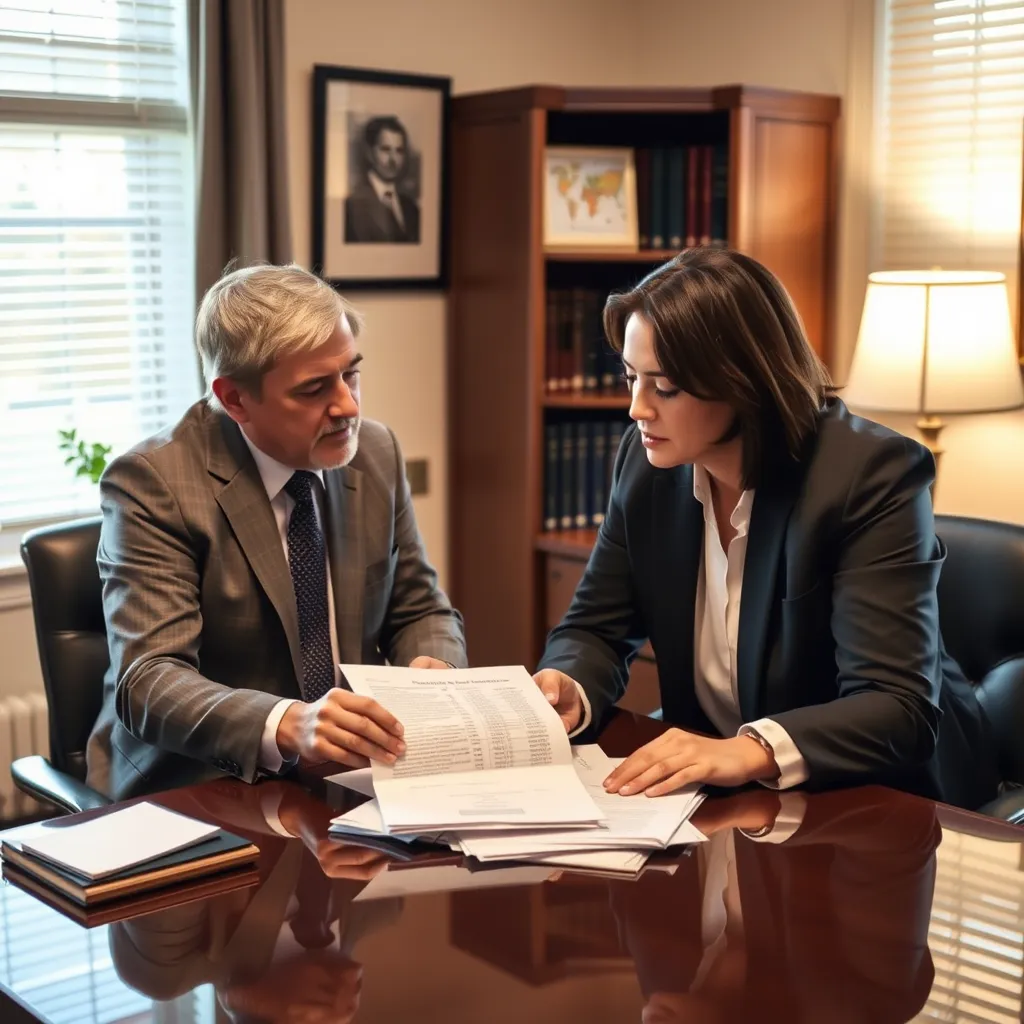
Post Divorce Modification Lawyer Falls Church, VA
Divorce is rarely a single event; it is often a transition that unfolds over time. Life changes—a significant career shift, the birth of a child, a change in income, or even a modification of custody arrangements—can render the original divorce decree inadequate or unfair. When these life circumstances shift, the law provides mechanisms to modify the existing agreement. However, the process is not automatic, and the laws governing property division, alimony, and child support are highly nuanced and vary significantly by jurisdiction.
For residents of Falls Church, VA, understanding how a post-divorce modification works requires more than general knowledge; it demands an attorney with deep roots in Northern Virginia family law. Our team at Law Offices Of SRIS, P.C. has extensive experience handling these sensitive and intricate matters across multiple jurisdictions, including neighboring areas like Arlington divorce lawyer and Alexandria divorce lawyer. We are committed to advocating for your best interests when seeking to adjust the terms of a previous settlement.
What Exactly Is a Post Divorce Modification in Virginia?
A post-divorce modification, sometimes referred to as a modification of divorce decree or marital settlement agreement, is a legal action taken after the initial divorce judgment has been finalized. It is not simply asking for a change; it is initiating a new legal proceeding to ask the court to alter specific terms that were set forth in the original decree because the underlying facts or circumstances have changed substantially.
Common Reasons for Seeking Modification
The reasons clients seek modification are diverse, but they generally fall into categories related to financial hardship or changes in family structure. Some of the most common grounds include:
- Change in Income: If one party experiences a significant pay raise or job loss that was not factored into the original support calculations.
- Custody Changes: When the needs of the children change, requiring adjustments to visitation schedules or primary custody arrangements.
- Alimony Needs: If one spouse’s financial needs increase due to health issues or educational pursuits, making the original alimony provisions insufficient.
- Property Valuation: If assets (like real estate or retirement accounts) have appreciated or depreciated significantly since the divorce was finalized.
It is crucial to understand that Virginia law requires a showing of “material change in circumstances” to even begin the modification process. Simply disagreeing with the original terms is usually insufficient; you must prove that the original decree no longer serves the best interests of either party, particularly the children.
When Can You Modify a Divorce Decree in Virginia?
The timing and grounds for modification are governed by strict state statutes. While some modifications can be sought years after the initial divorce, the window is not limitless, and the burden of proof rests heavily on the petitioner to demonstrate that the change was unforeseen or that the original decree was fundamentally unfair given current realities.
The Material Change Standard
This is the cornerstone of modification law. Virginia courts look for evidence that a substantial, material change has occurred since the date of the divorce. This change must be significant enough to warrant judicial intervention. For example, if one parent was relying on a specific income stream that has since vanished, or if a child’s educational needs have dramatically increased, these are strong indicators of material change.
Understanding Jurisdictional Differences
While we focus on Falls Church, VA, it is important to know that family law is highly state-specific. The rules governing property division in Virginia differ from those in Maryland or Washington D.C. This jurisdictional complexity is precisely why retaining local counsel is non-negotiable. A lawyer familiar with the specific judges, court procedures, and statutory interpretations within the Northern Virginia circuit courts can make the difference between a successful modification and a protracted, unsuccessful legal battle.
How Mr. Sris and the Firm’s Of Counsel Attorneys Handle Post Divorce Modification Cases in Falls Church
The process of modifying a divorce decree is fundamentally about re-establishing fairness in a constantly evolving personal and financial landscape. Our approach at Law Offices Of SRIS, P.C. is highly methodical, blending rigorous legal analysis with deep empathy for the client’s unique situation. When clients come to us seeking to modify terms—whether it involves adjusting child support due to a change in employment or revising alimony payments based on new financial realities—we begin by conducting an exhaustive review of the original decree and all subsequent life events. We do not treat modification as a simple paperwork update; we treat it as a comprehensive re-evaluation of your entire post-divorce life structure.
Our experienced attorneys work closely with you to build a compelling narrative supported by verifiable documentation. This includes gathering updated tax returns, employment verification, financial statements, and records detailing any changes in custody or care needs. Furthermore, we leverage our local network within the Falls Church legal community to understand judicial tendencies and procedural shortcuts that can expedite your case. By understanding the specific nuances of Virginia family law and the unique dynamics of the Northern Virginia courts, we are positioned to advocate effectively for a modification that accurately reflects your current circumstances, helping you achieve the stability and fairness you deserve.
About Mr. Sris and the Firm’s Of Counsel Attorneys
Law Offices Of SRIS, P.C. was founded on the principle that every client deserves representation that is both fiercely protective and deeply knowledgeable about the law. Mr. Sris, Owner and Founder, has built a practice dedicated to providing comprehensive legal counsel across multiple complex areas of family law. With a career spanning decades, including time as a former prosecutor, Mr. Sris brings a unique perspective to every case—one that understands how the law is enforced in the courtroom. He is admitted to practice law in Virginia, Maryland, the District of Columbia, New Jersey, and New York, providing our clients with a multi-jurisdictional depth of knowledge that few local firms can match.
Our commitment extends beyond Mr. Sris’s direct involvement. The firm’s Of Counsel attorneys are highly specialized practitioners who augment our team’s capabilities, allowing us to provide extensive experience across every facet of family law. These dedicated professionals work alongside the core team to ensure that whether your matter involves complex property division, child custody disputes, or post-divorce modification, you receive the highest level of care and advocacy. We view our entire network as one cohesive unit dedicated to achieving favorable outcomes for our clients.
Navigating the Modification Process with Local experience
The modification process is inherently stressful, involving intense emotional and financial vulnerability. It requires a strategic legal plan from day one. Our local experience in Falls Church, VA, allows us to anticipate procedural hurdles—from filing deadlines to required evidence formats—that an out-of-area attorney might miss. We guide you through every step, ensuring that your case is presented to the court in the strongest possible light.
The Role of Evidence in Modification
Unlike some legal areas where written agreements suffice, modification cases are heavily reliant on evidence. We help organize and present evidence that clearly demonstrates the material change in circumstances. This might include financial records showing income shifts, school records detailing educational needs, or medical documentation proving changes in health status. The quality of your evidence dictates the strength of your case.
Considering Alternative Dispute Resolution
While litigation is sometimes necessary, many post-divorce modifications can be resolved more efficiently through mediation or collaborative law. We guide our clients on whether ADR is appropriate for their situation. These alternatives can save significant time and emotional distress while still achieving a legally binding modification of the original decree.
Frequently Asked Questions About Post Divorce Modification in Falls Church, VA
Q: Do I need a lawyer to modify my divorce decree?
A: While not always legally mandatory, retaining an experienced local attorney is frequently consulted. Modification cases are complex, requiring precise adherence to Virginia statutes regarding material change in circumstances. An attorney ensures your rights are protected and that the court sees your case through the proper legal lens.
Q: How long does a modification hearing typically take?
A: The timeline varies dramatically based on the complexity of the finances, the cooperation of the other party, and the court’s current docket. While some simple modifications can be resolved relatively quickly, complex cases involving multiple jurisdictions or significant asset division may take many months.
Q: Does modifying my decree affect my ability to get a new loan?
A: Yes, potentially. A modification case itself does not directly impact your credit score, but the underlying financial changes that necessitate the modification (such as job loss or increased debt) can affect lenders’ assessments of your overall financial stability.
Q: Can I modify custody if we agree on everything?
A: Yes. If both parents agree on a change in custody or visitation, the process is typically smoother and often involves mediation or a joint filing with the court. However, even agreement requires formal court approval to be legally binding.
Q: What if my ex-spouse refuses to cooperate?
A: If your ex-spouse is uncooperative, the process becomes more adversarial. In these situations, the court will require robust evidence and may mandate mediation or even temporary orders to maintain stability until a final modification can be reached.
Q: Are there specific statutes of limitations for modifications?
A: While there isn’t a single statute of limitations for all modifications, the ability to modify is contingent upon demonstrating a material change. The court will assess whether the delay or lack of action prejudiced your rights or the best interests of the children.
Q: Does modifying my decree affect my tax filing status?
A: Yes, because financial support payments (like alimony and child support) are often treated as taxable income or deductions. Any modification to these amounts must be reviewed by a tax professional alongside your legal counsel.
Q: Is it better to settle out of court or go through trial?
A: Generally, settling out of court is preferable. Litigation is expensive, emotionally draining, and unpredictable. A skilled attorney can guide you toward a comprehensive settlement agreement that achieves your goals while minimizing conflict and cost.
The law surrounding post-divorce modification is highly sensitive to the specific facts of your life. Do not attempt to navigate this complex legal terrain alone. If you are a resident of Falls Church, VA, or the greater Northern Virginia area, and you need to modify an existing divorce decree, speak with an attorney who understands the local court system.
Call Law Offices Of SRIS, P.C. Today at (888) 437-7747 to schedule your confidential consultation. We are here to help you achieve a fair and stable resolution.
*Disclaimer:* *The information provided on this website is for educational purposes only and does not constitute legal advice. Every case is unique, and the laws governing divorce modifications change frequently. You must consult with an attorney licensed in your jurisdiction to discuss the specifics of your situation.*
Case results depend on a variety of factors unique to each case.
Attorney advertising. Prior results do not guarantee a similar outcome.