
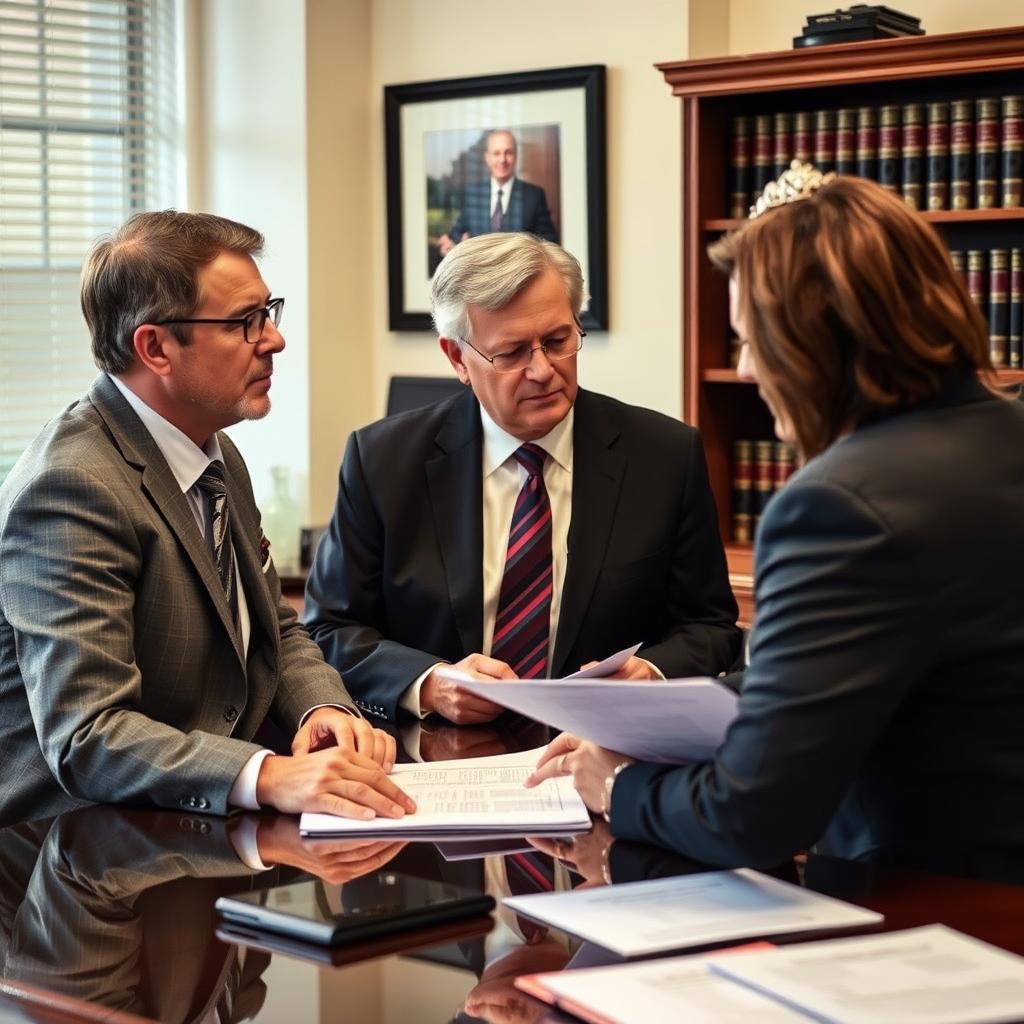
Fault Based Divorce Lawyer Dinwiddie County, VA
In Dinwiddie County, Virginia, a divorce grounded on fault requires a clear understanding of the statutory grounds set out in Va. Code § 20-91 and the willingness to present evidence of marital misconduct before the Dinwiddie County Circuit Court. When a party alleges adultery, cruelty, willful desertion, or a felony conviction as the basis for dissolution, the proceeding shifts from a no‑fault separation to a contested evidentiary matter. The Circuit Court, housed in the Dinwiddie Courthouse at Dinwiddie, VA 23841, holds exclusive original jurisdiction over all divorce complaints, while related custody and support issues may proceed in the Dinwiddie County Juvenile and Domestic Relations District Court. Mr. Sris, Owner and Founder of Law Offices Of SRIS, P.C., practices family law throughout Virginia and appears regularly in Dinwiddie County courts. For over two decades, he has guided clients through the complexities of fault‑based divorces, working to protect their interests in property division, spousal support, and parental rights. To discuss your fault based divorce matter in Dinwiddie County, contact Law Offices Of SRIS, P.C. at (888) 437-7747 or reach our Richmond location at (804) 201-9009 to request a consultation. Law Offices Of SRIS, P.C. – Advocacy Without Borders.
What Fault Based Divorce Means in Dinwiddie County
Virginia is an equitable distribution state; fault can influence not only the granting of the divorce itself but also the court’s decisions on property division under Va. Code § 20-107.3 and on spousal support under § 20-107.1. When a fault ground is proven, the court may weigh the circumstances of the marital misconduct when distributing marital assets, awarding maintenance, or even addressing attorney fees. The Dinwiddie County Circuit Court, part of the Eleventh Judicial District, hears divorce and equitable distribution matters. Located along the I‑85 corridor south of Petersburg, Dinwiddie County includes the communities of Dinwiddie and McKenney. Our Richmond location at 7400 Beaufont Springs Drive, Suite 300, Room 395, Richmond, VA 23225 serves clients throughout the county and is familiar with local court expectations.
Virginia law recognizes several fault grounds for an absolute divorce: adultery, cruelty that creates a reasonable apprehension of bodily harm, willful desertion or abandonment for one year, and conviction of a felony with imprisonment for more than one year. Adultery, if established by clear and convincing evidence, permits an immediate divorce without a separation period. Other fault grounds generally require a one‑year period of separation or, in the case of desertion, one year of abandonment. At least one corroborating witness is required for an uncontested divorce hearing; in contested fault proceedings, the burden of proof rests on the party alleging the ground. The requirement that one party be a bona fide resident and domiciliary of Virginia for six months before filing also applies. Because fault allegations affect the entire divorce proceeding, a thorough factual investigation and presentation before the Dinwiddie County Circuit Court are essential.
Dinwiddie County Circuit Court hears all divorce, equitable distribution, and spousal support matters. Standalone custody, visitation, and child support matters are handled by the Dinwiddie County Juvenile and Domestic Relations District Court.
How Mr. Sris and His Of Counsel Handle Fault Based Divorce Cases
Mr. Sris, a former prosecutor, approaches fault based divorces with the same evidentiary discipline used in criminal proceedings. He and his Of Counsel begin by evaluating the factual basis for each alleged ground, reviewing witness statements, documents, electronic communications, financial records, and any other evidence that may corroborate or refute the claim. Because fault must be proven to the court, careful preparation—not inflammatory accusations—drives the strategy. The team examines whether the evidence meets the statutory standard, identifies any procedural defenses or weaknesses in the opposing party’s case, and counsels clients on realistic goals. Where appropriate, they explore settlement through a property settlement agreement that resolves all issues without a contested trial, while preserving the client’s right to proceed on fault grounds when settlement is not feasible.
When a contested hearing becomes necessary, Mr. Sris and his Of Counsel present the evidence before the Dinwiddie County Circuit Court. They call witnesses, introduce corroborating documentation, and cross‑examine the opposing party. Because Virginia is an equitable distribution state, they also address how the fault should impact the division of marital property, the duration and amount of spousal support, and any other remedies the court may consider. Throughout the process, they keep clients informed of developments and work to manage both the legal strategy and the practical considerations that arise—from temporary support and custody arrangements pendente lite to the final decree. The objective remains to achieve a resolution that protects the client’s long‑term interests while meeting the procedural requirements of the Dinwiddie County courts.
About Mr. Sris and His Of Counsel Team
Mr. Sris founded Law Offices Of SRIS, P.C. in 1997 and serves as its Owner and Founder. A former prosecutor, he draws on trial experience to construct and present each fault‑based divorce case with precision. He is admitted to practice in Virginia, Maryland, the District of Columbia, New Jersey, and New York. Mr. Sris testified before the Virginia House Courts of Justice Committee in support of 2019 HB 635 (chief patron Del. David Bulova). His Of Counsel team includes attorneys with backgrounds in prosecution, law enforcement, and complex litigation. Together, Mr. Sris and his Of Counsel bring over 120 years of combined legal experience. Results may vary. Mr. Sris and his Of Counsel have documented 4,739+ case results across all practice areas since 1997.
Frequently Asked Questions
What are the fault grounds for divorce in Virginia?
Virginia recognizes adultery, cruelty, desertion for one year, and felony conviction with imprisonment for more than one year as fault grounds for an absolute divorce. These grounds are set forth in Va. Code § 20-91. Adultery, if proven by clear and convincing evidence, allows a divorce without any waiting period. Cruelty must be sufficient to cause a reasonable apprehension of bodily harm. Desertion requires a showing of willful abandonment for one year, and a felony conviction requires a sentence of confinement exceeding one year. Proving any of these grounds shifts the case into a contested posture that typically involves evidentiary hearings in the Dinwiddie County Circuit Court.
How does adultery affect property division in Virginia?
A finding of adultery can reduce the offending spouse’s share of marital property and may bar that spouse from receiving spousal support unless a denial would create a manifest injustice. Under Va. Code § 20-107.3, the court considers the circumstances and factors that contributed to the dissolution of the marriage, including adultery. While Virginia does not automatically award all property to the innocent spouse, the court weighs marital fault in making an equitable distribution. A successful adultery claim therefore carries significant financial consequences, making thorough evidence crucial.
Can I get a divorce based on cruelty in Dinwiddie County?
Yes, a divorce on the ground of cruelty may be granted if you can show that the other spouse’s conduct created a reasonable apprehension of bodily harm. Cruelty need not involve physical injury; threats, verbal abuse, or a course of conduct that places you in fear of harm may suffice. The evidence must convince the Dinwiddie County Circuit Court that continued cohabitation would be unsafe. Because the standard is fact‑intensive, Mr. Sris and his Of Counsel work with clients to gather testimony, medical records, and communications that support the claim while presenting the case with the appropriate evidentiary foundation.
What role does corroboration play in a fault based divorce?
Virginia law requires corroboration for every divorce, including fault‑based proceedings. The court cannot grant a divorce solely on the uncorroborated testimony of the parties. In a fault based divorce, the party alleging the ground must present independent evidence—a witness, documents, photographs, or other proof—that supports the claim. For example, in an adultery case, a private investigator’s report or the testimony of a third‑party witness may serve as corroboration. Mr. Sris and his Of Counsel work to identify and present admissible corroborating evidence that meets the court’s requirements at the Dinwiddie County Circuit Court.
Does fault affect child custody in Virginia?
Fault grounds, standing alone, do not determine child custody, but conduct related to the fault may be considered if it affects the best interests of the child. Virginia custody decisions are governed by the ten factors in Va. Code § 20-124.3, which consider the child’s relationship with each parent, the parents’ capacity to meet the child’s needs, and any history of family abuse. If the fault conduct—such as cruelty or adultery in a manner that exposes the child to harm—directly impacts the child’s well‑being, the Dinwiddie County Juvenile and Domestic Relations District Court will consider that evidence. The child’s best interests remain the overriding standard.
How do I start a fault based divorce in Dinwiddie County?
To begin a fault based divorce, you or your attorney must file a Complaint in the Dinwiddie County Circuit Court, alleging the specific fault ground and the facts supporting it. The complaint must be served on the other party. If the spouse contests the allegations, the case proceeds with discovery, motions practice, and ultimately a trial before the court. Because fault allegations raise the stakes and require proof, consulting an attorney before filing is essential. To discuss your matter, contact Law Offices Of SRIS, P.C. at (888) 437-7747 or reach our Richmond location at (804) 201-9009 to schedule a consultation.
For more information on Virginia divorce law, see the Virginia Code Title 20, the Virginia Judicial System, and the Dinwiddie County Circuit Court.
Attorney advertising. Prior results do not guarantee a similar outcome. Case results depend on a variety of factors unique to each case. Results may vary.