
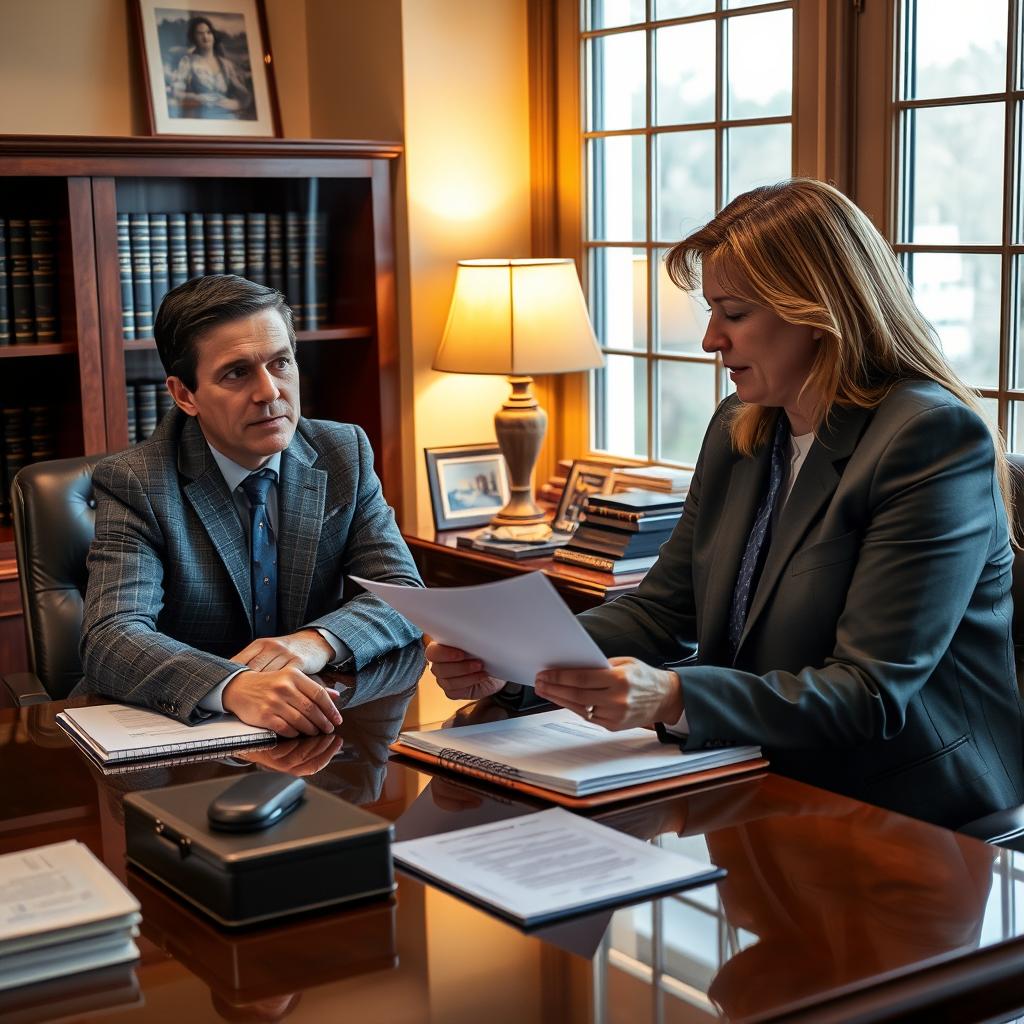
Equitable Distribution Lawyer King William County, VA
Equitable distribution is the legal framework courts in Virginia use to divide marital assets and debts when a marriage ends. In King William County, the Circuit Court applies the statutory factors set out in Virginia Code § 20-107.3 to determine a fair, though not necessarily equal, division of property. The process involves identifying, classifying, and valuing all marital and separate property, then weighing considerations such as the duration of the marriage, each spouse’s contributions to the family’s well‑being, and the reasons the marriage dissolved. Because equitable distribution can affect retirement accounts, real estate, business interests, and other substantial assets, careful preparation is essential. Mr. Sris, Owner and Founder of Law Offices Of SRIS, P.C., and the firm’s Of Counsel attorneys represent clients in King William County matters, working toward outcomes that reflect each client’s financial circumstances. To request a consultation, call (888) 437-7747. Law Offices Of SRIS, P.C. – Advocacy Without Borders.
Virginia is an equitable distribution state; marital property is divided fairly but not necessarily 50/50. The court considers the factors in Va. Code § 20-107.3.
Source: Va. Code § 20-107.3. Virginia Code
Reviewed by Mr. Sris, admitted in VA/MD/DC/NJ/NY.
What Equitable Distribution Means in King William County
King William County lies within Virginia’s Ninth Judicial District, and family law matters are heard at the King William County Circuit Court, located at 351 Courthouse Lane, Suite 201, King William, VA 23086. This court has exclusive jurisdiction over divorce, equitable distribution, and spousal support. Standalone custody, visitation, and child‑support matters are handled by the King William County Juvenile and Domestic Relations District Court. The firm’s Richmond location regularly serves clients in King William County, appearing before both the Circuit Court and the J&DR Court.
Virginia’s equitable distribution statute requires the court first to classify property as marital, separate, or hybrid. Marital property generally includes everything acquired by either spouse during the marriage, except gifts from a third party or inheritances. Separate property—assets owned before the marriage or acquired by gift or inheritance—is not divided. Once the marital estate is identified, the court values it and distributes it equitably based on the eleven factors enumerated in § 20-107.3: the monetary and non‑monetary contributions of each spouse, the duration of the marriage, the parties’ ages and health, how and when specific assets were acquired, the tax consequences of any proposed division, and any other factors the court finds relevant. King William County judges rely on these factors; no single factor controls, and the outcome is highly fact‑specific.
In King William County, as in all Virginia jurisdictions, equitable distribution does not automatically mean a 50/50 split. A spouse who contributed significantly to the acquisition or preservation of a particular asset may receive a larger share of it. Conversely, marital misconduct that affected the family’s finances can be considered. Parties are encouraged to reach a property settlement agreement that resolves division without trial. When a signed separation agreement is presented, the court can incorporate it into the final decree, streamlining the process and reducing uncertainty. Mr. Sris and the firm’s Of Counsel attorneys negotiate comprehensive separation agreements that address classification, valuation, retirement‑plan division, and tax implications, and they litigate when a fair agreement cannot be reached.
How Mr. Sris and His Of Counsel Handle Equitable Distribution Cases
Equitable distribution in a rural county like King William often involves assets that are not simply bank accounts and a house. Family farms, timberland, small‑business interests, and equipment are common. Law Offices Of SRIS, P.C. approaches each case by first gathering a complete picture of the marital estate. Mr. Sris, a former prosecutor with experience in complex financial analysis, works with the firm’s Of Counsel attorneys to identify all assets and debts, trace the source of funds for any disputed property, and engage forensic accountants or business valuators when necessary to establish accurate values. The team prepares detailed inventories and financial exhibits that allow the court to see the full picture.
The firm emphasizes settlement when it serves the client’s interests. A carefully drafted property settlement agreement can resolve classification disputes, specify how retirement plans will be divided through a Qualified Domestic Relations Order (QDRO), and address tax consequences—all without trial. Mr. Sris testified before the Virginia House Courts of Justice Committee in support of 2019 HB 635 (chief patron Del. David Bulova), a bill that revised the equitable distribution statute’s provisions on retirement plan division. This testimony gave him particular insight into the challenges that can arise with pensions, 401(k)s, and deferred‑compensation plans, and that understanding benefits every equitable distribution client the firm represents. When litigation is necessary, the firm presents evidence thoroughly and advocates positions grounded in the statutory factors.
About Mr. Sris and the Firm’s Of Counsel Attorneys
Mr. Sris, Owner and Founder of Law Offices Of SRIS, P.C., has practiced law since 1997 and is admitted in Virginia, Maryland, the District of Columbia, New Jersey, and New York. His background as a former prosecutor taught him to evaluate evidence carefully and build a case methodically—skills that translate directly to the financial discovery and analysis required in equitable distribution matters. Mr. Sris testified before the Virginia House Courts of Justice Committee in support of 2019 HB 635 (chief patron Del. David Bulova), which revised certain provisions of Virginia’s equitable distribution statute. He is particularly familiar with the division of retirement assets and the use of QDROs.
The firm’s Of Counsel attorneys bring extensive combined legal experience to family law matters. Because each Of Counsel attorney is an independent practitioner, the client receives focused attention and the benefit of multiple perspectives. The team handles cases throughout Virginia, including King William County, and can consult with financial and valuation attorneys as needed. Together, Mr. Sris and the firm’s Of Counsel attorneys strive to achieve a fair property division while keeping the process as efficient as possible. Results may vary.
Frequently Asked Questions
What is equitable distribution in Virginia?
Equitable distribution is the process by which a Virginia court divides marital property and debts based on what is fair, not necessarily equal, under Va. Code § 20-107.3. The court classifies assets as marital, separate, or hybrid, then values the marital estate and considers eleven statutory factors before deciding a division. Separate property—generally what each spouse owned before the marriage or received by gift or inheritance—is not divided. The process takes place in the Circuit Court; in King William County, that is the King William County Circuit Court at 351 Courthouse Lane.
Do I need a lawyer for an equitable distribution case in King William County?
No one is required to hire a lawyer, but navigating equitable distribution without counsel can jeopardize your financial future because classifying and valuing assets—especially businesses, retirement accounts, and real estate—is complex. A lawyer can help ensure accurate discovery, negotiate a favorable property settlement agreement, and present your case effectively if the court must decide. Mr. Sris and the firm’s Of Counsel attorneys appear regularly in King William County courts and understand how local judges apply the statutory factors.
How long does an equitable distribution case take in King William County?
The timeline varies based on whether the parties reach a settlement, the complexity of the marital estate, and the court’s calendar. An uncontested case with a signed separation agreement can reach a final decree in a matter of months after filing. Contested cases involving business valuations, expert testimony, and disputes over classification can extend considerably longer. The court schedules hearings on its own calendar; contacting the clerk’s office or your attorney can give you a better sense of current scheduling.
What property is not subject to equitable distribution in Virginia?
Separate property—assets a spouse owned before the marriage, inherited, or received as a gift from a third party—is generally not divided in equitable distribution. However, if separate property was commingled with marital property or if marital funds were used to improve or pay for it, the court may trace contributions and classify a portion as marital. The King William County Circuit Court will look at the source of funds and the parties’ actions during the marriage to make that determination.
How does the court value a business or professional practice in King William County?
The court relies on valuation evidence, often from a forensic accountant or business valuator, to determine the fair market value of a business or professional practice. Both active and passive appreciation must be analyzed. The business’s income, assets, market conditions, and goodwill are all considered. If you or your spouse owns a closely held business, farm, or professional practice, obtaining an accurate valuation is critical because it directly affects the marital estate’s size and the eventual division. Mr. Sris and the firm’s Of Counsel attorneys routinely collaborate with qualified financial attorneys in such cases.
Can we decide how to divide our property without going to court?
Yes; spouses can negotiate a property settlement agreement—often called a separation agreement—that resolves all property division, spousal support, and other financial matters without a trial. If the agreement is fair and fully addresses the marital estate, the King William County Circuit Court will typically incorporate it into the final divorce decree. Reaching an agreement can save time, reduce costs, and give the parties more control over the outcome. An experienced attorney can help draft a comprehensive agreement that protects your interests and complies with Virginia law.
Related pages:
Attorney advertising. Prior results do not guarantee a similar outcome.
Case results depend on a variety of factors unique to each case.
Results may vary.