
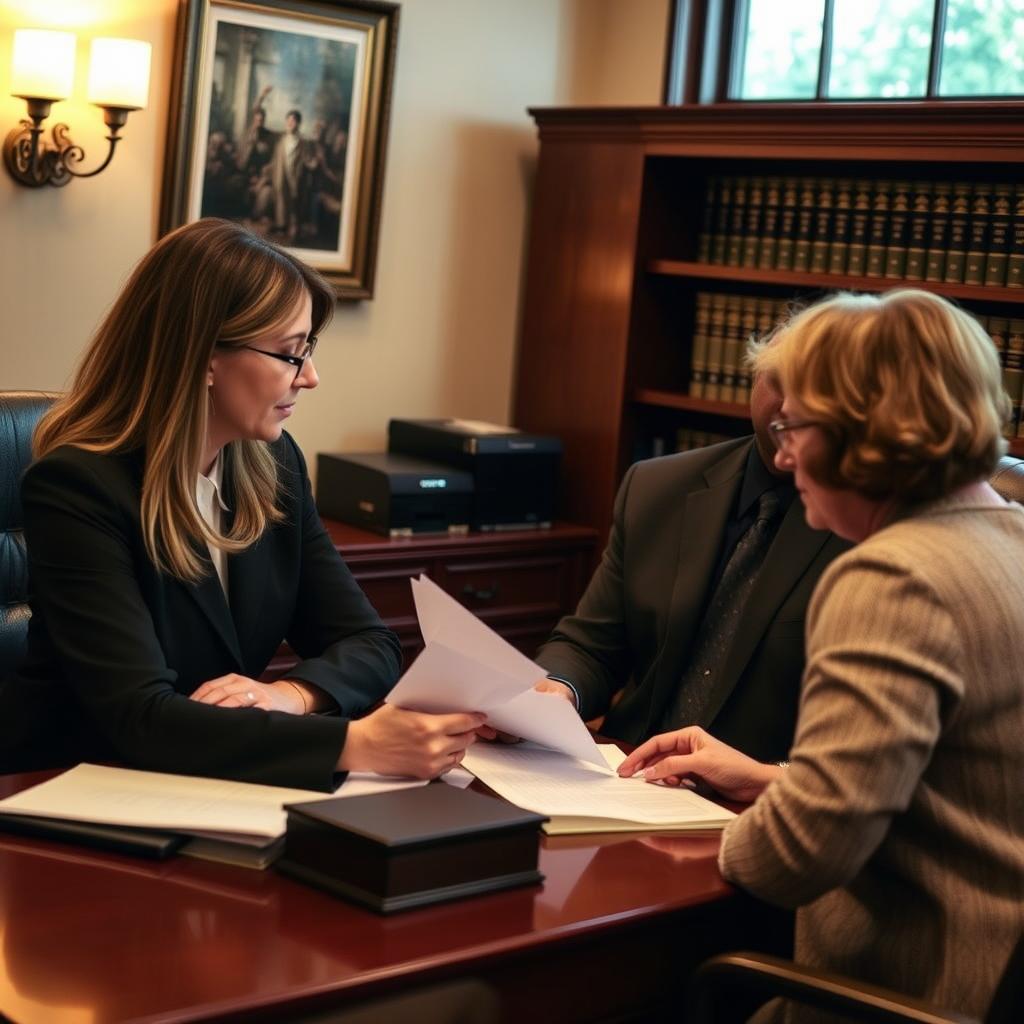
Business Valuation Divorce Lawyer Botetourt County
When a marriage involves a business, dividing that business during a divorce is one of the most intricate aspects a family can face. In Botetourt County, Virginia, business owners, professionals, and their spouses need clarity on how the value of a company, professional practice, or partnership will be treated in the equitable distribution process. Law Offices Of SRIS, P.C., founded in 1997, helps clients protect their financial interests in divorce matters that require a thorough understanding of business valuation. Mr. Sris and his Of Counsel bring extensive experience in family law and an awareness of the financial dimensions that a divorce involving business assets demands. Whether you own a closely held corporation or you are married to someone who does, knowing your rights and the valuation steps is essential to a fair resolution. To discuss how your business interests may be addressed in a Botetourt County divorce, call (888) 437-7747. Law Offices Of SRIS, P.C. — Advocacy Without Borders.
What Business Valuation Divorce Means in Botetourt County
In a Botetourt County divorce, business valuation refers to the process of determining the economic worth of a business interest for the purpose of dividing marital property. Under Virginia’s equitable distribution statute, marital property is classified and divided fairly, not necessarily equally. If a business was started during the marriage, grew in value during the marriage, or was commingled with marital funds, its value may be subject to division. The courts serving Botetourt County, including the Botetourt County Circuit Court and the Juvenile and Domestic Relations District Court, handle these matters within the framework of Virginia law. A spouse who is not active in the business still has a legitimate interest in its marital portion, and the court will look to financial records, tax returns, and business operations to identify what portion of the business is marital property and what may be separate.
Botetourt County’s mix of family-owned enterprises, professional practices, and agricultural operations means that business valuation disputes often touch real estate, equipment, and goodwill. Because Virginia does not prescribe a single formula for valuation, the court has discretion to consider the evidence presented. A fair appraisal may require the involvement of forensic accountants, valuation experts, and legal counsel who understand how the county’s court system approaches discovery, expert testimony, and settlement conferences. Mr. Sris and his Of Counsel regularly assist clients in Botetourt County by organizing the financial documentation and working with valuation professionals to build a complete picture of a business’s worth. The goal is to present the financial reality clearly while protecting the client’s long-term interests.
How Mr. Sris and His Of Counsel Handle Business Valuation Divorce Cases
Mr. Sris and his Of Counsel begin by reviewing the ownership structure of the business and the timeline of the marriage to determine which portion of the business is marital property. They work with forensic accountants and, when necessary, business appraisers to compile a thorough financial record. Key documents—such as tax returns, profit-and-loss statements, balance sheets, and shareholder agreements—are examined to build an accurate picture of the company’s value. Throughout the process, the team coordinates with the client to understand the operational reality of the business, including whether it is a going concern that both spouses depend on for income or an asset that may need to be liquidated. The objective is to present a well-supported valuation that withstands scrutiny in settlement discussions or in court.
When a business is closely held, its value often depends on more than the numbers; goodwill, non-compete agreements, and the owner’s personal role in generating revenue can influence the valuation. Mr. Sris and his Of Counsel handle these nuanced factors by engaging the right experts and by preparing clients for the possibility that the court will hear competing valuations. For Botetourt County cases, the team is familiar with local court procedures for scheduling discovery deadlines, status conferences, and evidentiary hearings. This hands-on approach allows the client to understand the likely timeline and the strategic choices available—whether to negotiate a buy-out, exchange other assets, or continue operating the business under a court-approved arrangement. The firm focuses on preserving the economic viability of the business while securing a fair outcome for the client.
About Mr. Sris and His Of Counsel Team
Mr. Sris, Owner and Founder of Law Offices Of SRIS, P.C., is admitted to practice in Virginia, Maryland, the District of Columbia, New Jersey, and New York. He has handled a wide range of family law matters since the firm was founded in 1997, including divorces that involve the valuation and division of business interests. Mr. Sris testified before the Virginia House Courts of Justice Committee in support of 2019 HB 635 (chief patron Del. David Bulova). His understanding of Virginia’s legislative and procedural landscape informs the representation the firm provides to clients in Botetourt County. Mr. Sris and his Of Counsel bring over 120 years of combined legal experience. Results may vary; prior outcomes do not guarantee a similar result. Results may vary.
All attorneys who work on the firm’s matters are Of Counsel—experienced legal professionals engaged through Excella. This structure ensures that every client benefits from a deep pool of knowledge without the constraints of an associate‑driven model. In business valuation divorces, the team’s collective experience includes working with forensic accountants, business appraisers, and tax professionals. Mr. Sris and his Of Counsel focus on protecting the financial interests of clients throughout Botetourt County, whether the dispute involves a small family business or a more complex enterprise. They provide a measured, professional approach that respects the sensitivity of both the family and the business at stake.
Frequently Asked Questions
What is business valuation in a divorce context?
Business valuation in a divorce determines the economic value of a business interest for the purpose of dividing marital property. The process typically examines assets, liabilities, earnings history, and market conditions to establish what the business is worth. In Virginia, the court may consider both the value of tangible assets and intangible factors such as goodwill. The valuation becomes critical when one spouse owns an interest in a company, partnership, or professional practice because that value can affect spousal support, property distribution, and the overall financial settlement. An accurate valuation requires a thorough review of financial records, often with the help of forensic accountants and business appraisers.
Do I need a lawyer for business valuation issues in my Botetourt County divorce?
Yes. Business valuation draws on accounting, tax, and legal principles that intersect in complex ways. A lawyer who understands Virginia’s equitable distribution framework can help you identify what portion of a business is marital property, challenge an opposing valuation, and negotiate a settlement that protects your interests. In Botetourt County, having local counsel who is familiar with the court’s procedures and the types of businesses common in the region—such as farming operations, retail stores, and professional practices—adds practical insight. An attorney can coordinate with experts, present evidence effectively, and help you decide whether to pursue a buy-out, exchange of assets, or another resolution.
How is a business valued under Virginia law?
Virginia courts use a fact-intensive approach rather than a single formula. Typically, a valuation experienced attorney will consider several methods: an asset-based approach, an income-based approach, and a market-based approach. The choice of method depends on the nature of the business, its industry, and the availability of reliable data. Factors such as future earning capacity, marketability, and the owner’s role can also influence the final figure assigned to the business. The court has the discretion to weigh competing valuations. Having an attorney who can scrutinize the experienced attorney’s methodology and present a counter‑analysis is essential for a fair division of the marital portion of the business.
What should I do if my spouse owns a business but I am not involved in it?
Even if you are not involved in day-to-day operations, you may still have a right to a share of the increase in the business’s value that occurred during the marriage. You should gather financial documents—such as tax returns, bank statements, and business records—that may show the company’s growth. It is important to consult with an attorney who can determine whether parts of the business are marital property and can arrange for a forensic accountant to trace the source of funds. In Botetourt County, the court can order the disclosure of financial information and can impose penalties for hiding assets. Early legal guidance helps level the playing field.
Can a business be divided without selling it in Botetourt County?
Yes. Many divorce settlements involving a business do not require a sale. The parties may agree that one spouse keeps the business while the other receives a greater share of other marital assets—such as the home, retirement accounts, or investment accounts—to balance the division. Alternatively, the owner spouse may pay the other spouse a cash settlement, often structured over time. If an agreement cannot be reached, the court can order a specific division, but the court generally prefers to avoid forcing the sale of a viable business. Negotiating a creative solution that preserves the business while fairly compensating the non‑owner spouse is a common outcome.
Attorney advertising. Prior results do not guarantee a similar outcome.
Results may vary.
Case results depend on a variety of factors unique to each case.