
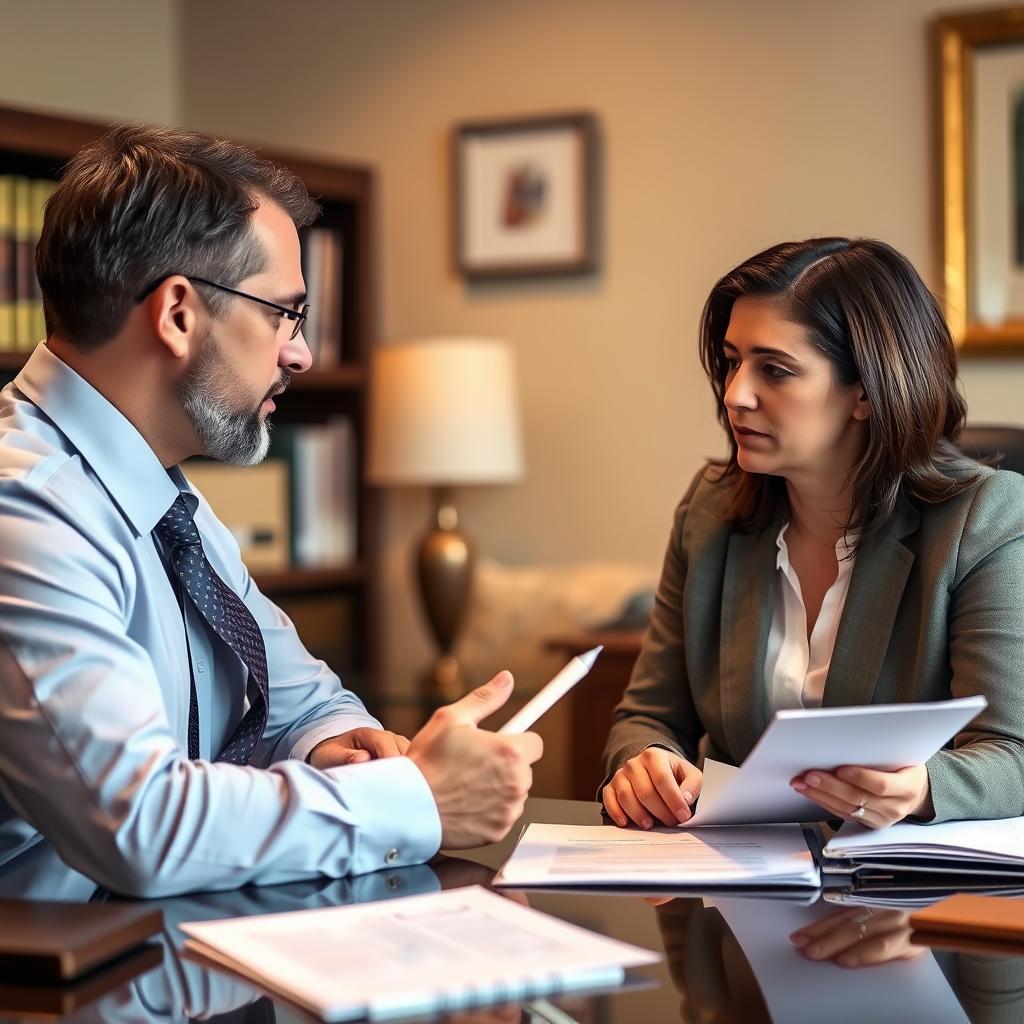
Adultery Divorce Lawyer York County, VA
If you are confronting a divorce in York County, Virginia, and adultery is involved, the legal landscape changes significantly. Under Virginia Code § 20‑91(1), adultery is a fault‑based ground for divorce from the bond of matrimony. Unlike the no‑fault separation‑based grounds, an adultery filing carries no waiting period — a spouse who can prove the other’s adultery may proceed to a divorce decree without first living apart for six months or a year. Law Offices Of SRIS, P.C., founded in 1997, brings decades of family‑law experience to adultery divorce cases throughout York County, including Yorktown, Grafton, Tabb, and Seaford. Mr. Sris, Owner and Founder, leads a team of Of Counsel attorneys with over 120 years of combined legal experience and 4,739+ documented firm-wide results. Results may vary. For a confidential consultation, call (888) 437‑7747. Law Offices Of SRIS, P.C. – Advocacy Without Borders.
What Adultery Divorce Means in York County, Virginia
Virginia is an equitable‑distribution state, and adultery is one of several fault grounds recognized under Va. Code § 20‑91. The spouse alleging adultery must prove the misconduct by clear and convincing evidence — a higher standard than the “preponderance of the evidence” that governs most civil claims. The proof can come from direct testimony, documentary evidence, or strong circumstantial indicia. In York County, adultery divorce actions are heard exclusively in the York County Circuit Court, located at 300 Ballard Street, Yorktown, Virginia. While the separate York County Juvenile and Domestic Relations District Court handles custody, support, and protective orders, the circuit court has original jurisdiction over the divorce itself, including all related equitable‑distribution and spousal‑support issues.
Because adultery is a fault ground, its impact extends beyond simply ending the marriage. The circuit court must classify and divide marital property under Va. Code § 20‑107.3. Among the eleven statutory factors the court weighs are the circumstances and factors that contributed to the dissolution of the marriage — a factor that can permit the court to take proven adultery into account when fashioning an equitable distribution. Adultery may also affect a request for spousal support: a spouse found to have committed adultery is statutorily barred from receiving permanent spousal support unless the court finds that a denial would cause a manifest injustice, based on consideration of the respective degrees of fault and relative economic circumstances. These consequences make adultery divorce cases among the most fact‑intensive and strategically nuanced proceedings in York County family law.
York County occupies a strategic geography along the Virginia Peninsula, with the historic Yorktown waterfront and major transportation arteries such as Interstate 64 and U.S. Route 17. The communities of Grafton, Tabb, and Seaford all fall within the county, and the circuit court serves the entire area. Mr. Sris and his Of Counsel appear regularly at the York County Circuit Court and understand the local procedural expectations of the Ninth Judicial District. When a case involves allegations of adultery, thorough pre‑filing investigation, careful pleading, and a command of Virginia’s evidentiary rules are essential — areas where the firm’s experience provides a meaningful advantage.
How Mr. Sris and His Of Counsel Handle Adultery Divorce Cases in York County
Every adultery‑based divorce begins with a detailed factual assessment. Mr. Sris and his Of Counsel work closely with clients to gather the evidence necessary to meet the clear‑and‑convincing standard — or, for the spouse accused of adultery, to challenge the sufficiency and admissibility of the other side’s proof. The firm’s approach emphasizes methodical preparation: reviewing financial records, electronic communications, travel logs, and other sources that can corroborate or refute an adultery claim. Because Virginia allows fault to influence property division and spousal support, the evidentiary record often directly shapes the financial outcome of the case.
Once the facts are understood, the legal team develops a strategy that may include negotiation toward a comprehensive separation agreement or, when a resolution cannot be reached, litigation in the York County Circuit Court. Pendente lite motions—requests for temporary relief while the divorce is pending—can address living arrangements, use of marital assets, and interim support. Mr. Sris and his Of Counsel regularly handle these hearings and understand the local court’s scheduling and procedural rhythms. Throughout the process, the firm works to protect clients’ interests in marital property, business assets, retirement accounts, and, when children are involved, custody and visitation arrangements that serve the child’s best interests under Va. Code § 20‑124.3.
Because adultery often implicates sensitive personal and financial details, discretion and a calm, professional approach are integral to the firm’s practice. Mr. Sris and his Of Counsel concentrate on resolving matters as efficiently as the facts permit, while preparing every file as though trial is inevitable — a discipline that strengthens settlement positions and ensures a strong presentation if the case must be decided by a judge.
About Mr. Sris and His Of Counsel Team
Mr. Sris, Owner and Founder of Law Offices Of SRIS, P.C., is a former prosecutor. He has practiced family law since the firm’s inception in 1997 and is admitted to the bars of Virginia, Maryland, the District of Columbia, New Jersey, and New York. Mr. Sris testified before the Virginia House Courts of Justice Committee in support of 2019 HB 635 (chief patron Del. David Bulova) — legislation that revised Va. Code § 20‑107.3(g) and clarified important provisions governing the distribution of retirement and pension assets upon divorce. That engagement with Virginia’s legislative process reflects a deep familiarity with the statutory framework that governs every divorce filed in the Commonwealth.
The Of Counsel attorneys who work alongside Mr. Sris on adultery divorce matters bring extensive trial experience and a practical understanding of the York County courts. Collectively, this team has documented thousands of family‑law representations across Virginia. Mr. Sris and his Of Counsel bring over 120 years of combined legal experience and 4,739+ documented firm-wide results. Results may vary. Clients benefit from the firm’s ability to handle complex property division, forensic business valuation, and multi‑jurisdictional issues that sometimes arise when spouses live or hold assets outside Virginia. The firm’s Richmond location — 7400 Beaufont Springs Drive, Suite 300, Room 395, Richmond, VA 23225 — serves York County and the broader Peninsula area. Reach the Richmond location at (804) 201‑9009 or the firm’s toll‑free number (888) 437‑7747.
Frequently Asked Questions
What are the grounds for an adultery divorce in Virginia?
Adultery, sodomy, or buggery committed outside the marriage is a fault‑based ground for divorce under Va. Code § 20‑91(1), requiring clear and convincing proof but no mandatory separation period. The spouse filing on this ground must present evidence sufficient to meet the elevated burden of proof. If established, the court may grant a divorce from the bond of matrimony without requiring the parties to have lived apart for any length of time. The absence of a waiting period can be an important procedural advantage for a spouse who wants to dissolve the marriage promptly, but the truth‑finding process is exacting and requires careful preparation. The allegations can also influence the court’s decisions on property division and spousal support.
How does proving adultery affect property division in a York County divorce?
Adultery is one of the eleven statutory factors the court considers under Va. Code § 20‑107.3 when dividing marital property, but it does not automatically result in a larger share for the innocent spouse. The court evaluates the circumstances that contributed to the dissolution of the marriage alongside other factors such as the duration of the marriage, the monetary and non‑monetary contributions of each spouse, and the ages and health of the parties. A spouse who committed adultery may also be barred from receiving permanent spousal support unless a denial would cause manifest injustice. Because adultery can affect both property and support, the evidentiary record built early in the case is critical to the final decree.
Do I need a lawyer for an adultery divorce in York County?
Virginia law does not require you to hire a lawyer, but adultery divorce cases involve a higher burden of proof and factual complexity that make experienced representation highly advisable. The clear‑and‑convincing evidence standard is demanding, and the strategic use (or challenge) of adultery evidence can shift the financial outcome. Self‑represented parties often struggle with evidentiary rules, discovery procedures, and the presentation of circumstantial evidence. Mr. Sris and his Of Counsel handle all aspects of the case, from investigation through trial if necessary. For guidance on your specific situation, reach Law Offices Of SRIS, P.C. at (888) 437‑7747.
How is child custody affected when adultery is alleged?
Adultery, by itself, does not control custody decisions; the court always decides custody based on the best interests of the child under Va. Code § 20‑124.3. If the adulterous conduct had a direct negative impact on the child — for example, exposing the child to an unsafe environment or causing neglect — the court may weigh that evidence under the statutory factors. However, a parent’s infidelity alone, without a demonstrated effect on the child’s well‑being, ordinarily will not change a custody determination. Custody disputes in York County are first addressed in the Juvenile and Domestic Relations District Court when a divorce is not yet filed, and in the Circuit Court when they are part of the divorce action.
What kind of evidence is needed to prove adultery in Virginia?
Adultery must be proved by clear and convincing evidence, which may include direct admissions, witness testimony, or compelling circumstantial evidence such as hotel records, financial statements, or digital communications. Virginia courts recognize that direct proof of sexual intercourse is rare and permit the inference of adultery from evidence that shows both an inclination and an opportunity to commit the act. The evidence must be more than mere suspicion or conjecture. Photographs, social‑media posts, and text messages are frequently used, but their admissibility and weight depend on proper foundation. The firm works with clients to identify and preserve admissible evidence while respecting legal boundaries.
Can I file for divorce in York County if my spouse committed adultery but lives out of state?
Yes, if you meet Virginia’s residency requirement — at least six months of domicile and residence in Virginia immediately before filing (Va. Code § 20‑97) — you may file in York County even if your spouse resides elsewhere. The York County Circuit Court can exercise jurisdiction over the marriage if the filing spouse is a genuine Virginia domiciliary. Service of process on an out‑of‑state spouse follows the procedures set forth in Virginia’s long‑arm statute and applicable rules. The geographic location of the spouse may introduce logistical challenges, but they do not bar the filing. To discuss the details of your matter, contact Law Offices Of SRIS, P.C. at (888) 437‑7747.
Additional Virginia Family Law Resources
Our firm also serves clients in neighboring localities. Learn more about family law representation in these areas:
- Family Law Attorney James City County, VA
- Family Law Lawyer Williamsburg, VA
- Family Law Attorney Fairfax County, VA
Primary‑source Virginia authorities:
Attorney advertising. Prior results do not guarantee a similar outcome.
Results may vary.
Case results depend on a variety of factors unique to each case.