
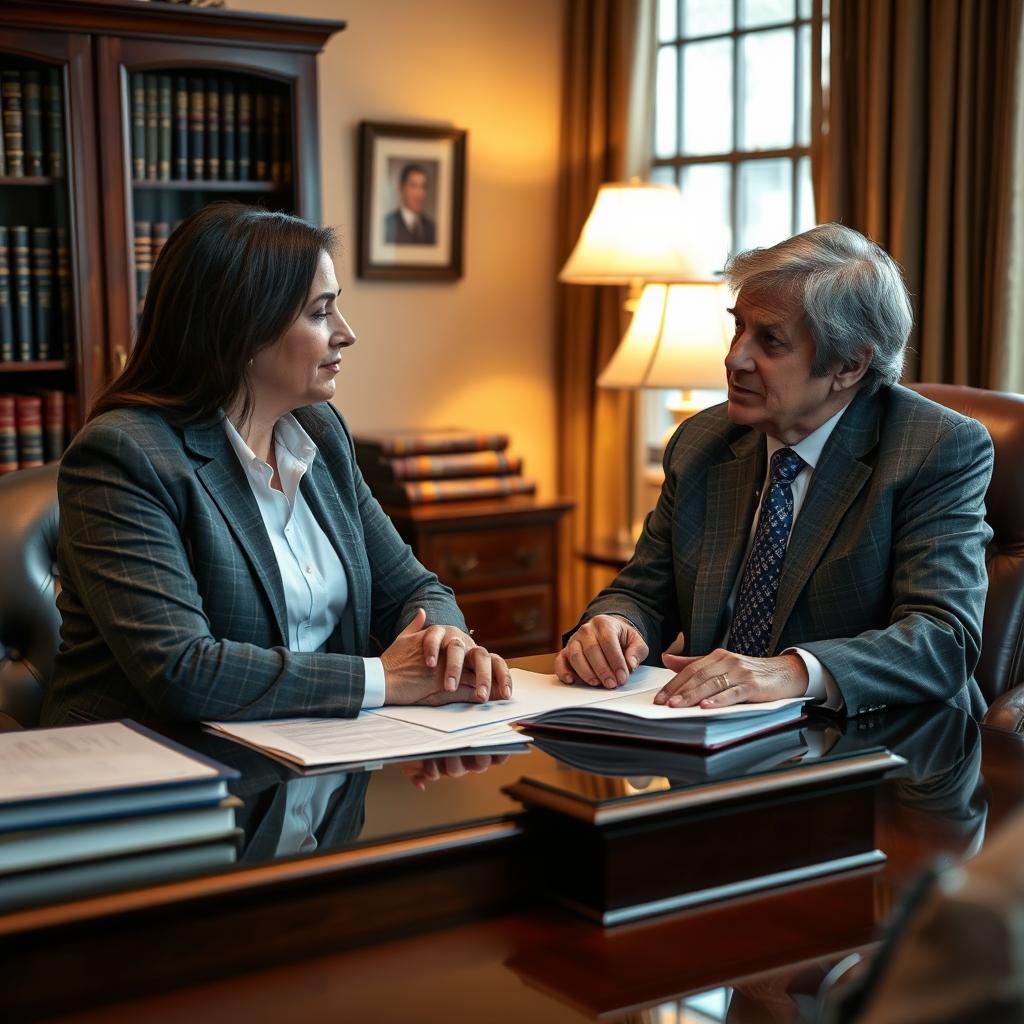
Adultery Divorce Lawyer Rockingham County, VA
You have just discovered that your spouse has been unfaithful. The betrayal cuts deep, and you are considering divorce. In Rockingham County, Virginia, adultery is a fault ground for divorce, and it can have a significant impact on property division, spousal support, and even child custody. Law Offices Of SRIS, P.C. represents individuals navigating adultery divorce in Harrisonburg, Bridgewater, Dayton, Elkton, Timberville, Broadway, and throughout the Shenandoah Valley. For a confidential consultation about your situation, call (888) 437-7747.
How We Approach Adultery Divorce in Rockingham County
When adultery is the basis for ending a marriage, the approach must be both strategic and compassionate. Mr. Sris and his Of Counsel team begin by learning the facts of your case—where the marriage stands, what evidence of infidelity exists, and what you hope to achieve. Adultery is not just an emotional wound; under Virginia law it can directly affect how marital property is divided and whether spousal support is awarded. We work to build a thorough record, whether through electronic evidence, witness statements, or financial records, while always aiming to resolve matters without unnecessary courtroom conflict.
If a negotiated settlement is possible, we prepare a detailed separation agreement that addresses property, support, and custody. If the other side is unwilling to cooperate or the facts require judicial intervention, Mr. Sris—a former prosecutor—and his Of Counsel are prepared to try the case in the Rockingham County Circuit Court. In every matter we handle, the goal is to protect your interests and help you move forward with clarity.
What to Expect in a Rockingham County Adultery Divorce
Virginia grants an absolute divorce based on adultery under Va. Code § 20-91(1). Unlike no‑fault grounds, an adultery claim does not require a mandatory separation period. Once you are a domiciliary resident of Virginia for at least six months, you may file a Complaint at the Rockingham County Circuit Court, located at 53 Court Square, Harrisonburg, VA 22801. The Circuit Court has exclusive original jurisdiction over divorce and equitable distribution; custody and support matters arising out of a divorce are also heard there, though the Rockingham County Juvenile and Domestic Relations District Court handles standalone custody and protective order petitions.
The process begins with drafting and filing the complaint, serving your spouse, and if needed, requesting pendente lite relief—temporary custody, support, or use of the marital home—while the divorce moves forward. Discovery follows, and both sides exchange information. In many cases, the matter resolves through a property settlement agreement. In our practice, uncontested divorces where the parties sign a comprehensive separation agreement can be finalized within 2 to 4 months after filing. Contested adultery cases typically range from 9 to 18 months, influenced by the court’s calendar, the complexity of the marital estate, and the willingness of the parties to settle. The Circuit Court filing fee for a divorce complaint varies; service of process costs also apply, and additional fees may arise for pendente lite motions, Guardian ad Litem appointments, or forensic experts.
How Adultery Affects Your Divorce
Virginia is an equitable distribution state, not a community property state. The court divides marital property based on eleven factors set out in Va. Code § 20-107.3. Adultery can weigh heavily among those factors, particularly when marital assets were used to further the affair. In addition, a spouse who commits adultery is generally barred from receiving spousal support unless the court finds that denying support would create a manifest injustice—a high standard. On the other hand, the innocent spouse may seek a larger share of the marital estate and spousal support based on the proven misconduct.
Child custody is determined by the best interests of the child under Va. Code § 20-124.3. While adultery alone does not automatically disqualify a parent, the court may consider how the affair or the surrounding circumstances affect the child’s welfare. An experienced family law attorney can help you understand how the specific facts of your case are likely to influence the outcome. For a full statutory analysis of Virginia divorce law, visit our comprehensive divorce resource page.
Your Adultery Divorce Attorney in Rockingham County
Mr. Sris, Owner and Founder of Law Offices Of SRIS, P.C., has practiced law since 1997 and is admitted in Virginia, Maryland, the District of Columbia, New Jersey, and New York. As a former prosecutor, he brings a unique perspective to family law litigation—understanding how opposing counsel builds a case and how to challenge evidence effectively. Mr. Sris testified before the Virginia House Courts of Justice Committee in support of 2019 HB 635 (chief patron Del. David Bulova).
Mr. Sris and his Of Counsel bring over 120 years of combined legal experience and have achieved 4,739+ documented firm-wide results. Results may vary. The team includes former prosecutors and a former Virginia State Trooper, each contributing practical insight into investigation, trial strategy, and negotiation. Together, they handle adultery divorce matters throughout Rockingham County and the Shenandoah Valley, meeting clients by appointment at the firm’s Shenandoah/Woodstock location at 505 N Main St, Suite 103, Woodstock, VA 22664.
Frequently Asked Questions
Do I need a lawyer for an adultery divorce in Rockingham County?
You are not required to hire a lawyer, but adultery divorce involves complex issues of evidence, property classification, and spousal support that benefit from experienced legal guidance. Proving adultery can be challenging; a misstep can weaken your case or expose you to countersuits. An attorney understands the local courts, evidentiary standards under Va. Code § 20-91(1), and how to build a record that protects your financial and parental rights. To discuss your matter, contact Law Offices Of SRIS, P.C. at (888) 437-7747.
What are the grounds for an adultery divorce in Virginia?
Adultery is one of several fault‑based grounds for divorce listed in Va. Code § 20-91(1). To obtain a divorce on this ground, you must prove by clear and convincing evidence that your spouse engaged in voluntary sexual intercourse with someone other than you. Unlike no‑fault divorce, no separation period is required; you may file as soon as the adultery occurs and you meet the six‑month residency requirement. The case is heard in the Rockingham County Circuit Court in Harrisonburg.
How long does an adultery divorce take in Rockingham County?
An adultery divorce can move faster than a no‑fault divorce because there is no mandatory separation period. Uncontested cases with a signed settlement agreement often resolve within 2 to 4 months after filing. Contested cases, where the parties disagree on property, support, or custody, generally take 9 to 18 months, depending on court scheduling and the complexity of the marital estate. For specific guidance on your timeline, call (888) 437-7747.
How does adultery affect property division in Virginia?
Virginia is an equitable distribution state; courts divide marital property fairly after considering eleven factors, and adultery can shift the division. If marital funds were spent on the affair, the innocent spouse may receive a larger share of the remaining assets. The court also weighs the circumstances that led to the breakdown of the marriage. A detailed financial analysis is critical, and Mr. Sris and his Of Counsel work with forensic accountants when needed to trace assets.
Can I still get spousal support if my spouse committed adultery?
An innocent spouse may receive spousal support, while an adulterous spouse is generally barred from receiving it. Va. Code § 20-107.1 creates a presumption against awarding support to a spouse who committed adultery, unless denying support would result in a manifest injustice. The innocent spouse may seek support based on need and the other spouse’s ability to pay, with the misconduct considered a factor. Every case is unique; schedule a consultation to evaluate your situation.
How do I prove adultery in a Rockingham County divorce?
Clear and convincing evidence is required, which can include direct testimony, electronic communications, hotel records, and financial trails. Virginia courts do not insist on an eyewitness, but the evidence must establish both a disposition and an opportunity to commit the act. Investigators and digital forensics attorneys are often used. Mr. Sris and his Of Counsel evaluate the available proof early in the case and advise on the most effective strategy for presenting it in the Rockingham County Circuit Court.
What if both spouses committed adultery?
If both parties are at fault, the court may treat the divorce as though it were based on mutual fault and apply equitable principles. Neither spouse may automatically be barred from spousal support, and the property division will reflect the overall conduct. The outcome depends heavily on the particular facts, making experienced legal representation essential.
Speak With an Adultery Divorce Lawyer Today
If you are facing the pain of a spouse’s infidelity in Rockingham County or the surrounding Shenandoah Valley communities, Law Offices Of SRIS, P.C. is ready to help. We represent clients in Harrisonburg, Bridgewater, Dayton, Elkton, Timberville, Broadway, and throughout the Twenty‑sixth Judicial District. Call (888) 437-7747 to request a confidential consultation. Our Shenandoah/Woodstock location at 505 N Main St, Suite 103, Woodstock, VA 22664 serves the Rockingham County courts by appointment.
Attorney advertising. Prior results do not guarantee a similar outcome. Results may vary.
Case results depend on a variety of factors unique to each case.