
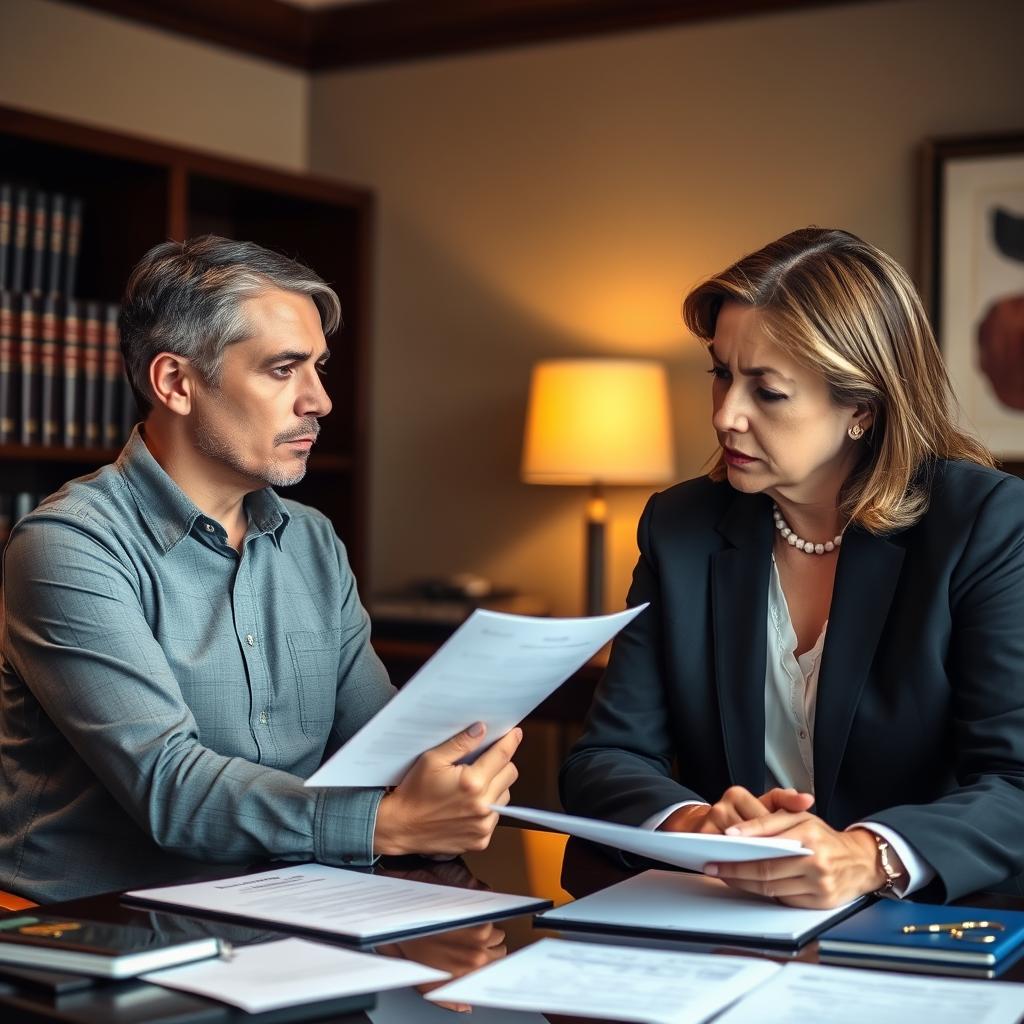
Postnuptial Agreement Lawyer Dinwiddie County, VA
A postnuptial agreement is a written contract entered into by spouses after they are married, setting out how property, debts, spousal support, and other financial matters would be handled if the marriage ends through divorce or death. In Virginia, these agreements are governed by the Premarital Agreement Act (Va. Code § 20‑147 et seq.), which allows married couples to define their property rights and financial obligations outside the default rules of equitable distribution. For couples in Dinwiddie County, having a carefully drafted postnuptial agreement can provide clarity, protect separate property, and reduce conflict during an already difficult time. Mr. Sris and the firm’s Of Counsel attorneys represent clients throughout Dinwiddie County, including the communities of Dinwiddie and McKenney, and regularly appear before the Dinwiddie County Circuit Court when a postnuptial agreement is at issue in a subsequent divorce or enforcement proceeding. Our Richmond Location serves the entire county, and we are available to discuss your situation. Contact Law Offices Of SRIS, P.C. at (888) 437-7747 to schedule a consultation. Law Offices Of SRIS, P.C. – Advocacy Without Borders.
What Is a Postnuptial Agreement and How Does It Work in Dinwiddie County?
A postnuptial agreement is a legally binding contract between spouses that resolves questions of property division, spousal support, and related financial issues. Under Virginia law, such an agreement must be entered into voluntarily, with full and fair disclosure of each spouse’s assets and obligations, and cannot be unconscionable at the time of enforcement. The Dinwiddie County Circuit Court, located at the Dinwiddie Courthouse, has exclusive jurisdiction over divorce and equitable distribution matters, meaning any challenge to the validity or enforcement of a postnuptial agreement will be heard in that court. Because the agreement is a contract, courts interpret it using standard contract principles, and a well-drafted document will define exactly what each spouse keeps, what is shared, and how spousal support may be modified or waived.
In Dinwiddie County, many couples seek postnuptial agreements after a change in circumstances—such as starting a business, receiving an inheritance, or acquiring significant retirement assets—or simply to reinforce financial planning that was not addressed before marriage. While premarital agreements receive wide attention, postnuptial agreements serve a similar protective function and are enforceable under the same statutory framework when drafted correctly. Because Virginia is an equitable distribution state, property not addressed in a valid agreement will be divided according to the factors listed in Va. Code § 20‑107.3, which can lead to outcomes that neither spouse intended. A postnuptial agreement allows you to control your own financial future.
Frequently Asked Questions
What is a postnuptial agreement?
A postnuptial agreement is a contract between spouses, entered into after marriage, that dictates how assets, debts, and support will be handled upon divorce or death. In Virginia, these agreements are authorized by the Premarital Agreement Act and are treated as enforceable contracts if they were made voluntarily, with full financial disclosure, and are not unconscionable. They typically cover property classification, division of real and personal property, spousal support, and inheritance rights. For a Dinwiddie County couple, having such an agreement can avoid the uncertainty of equitable distribution litigation later.
Why would a couple in Dinwiddie County need a postnuptial agreement?
Couples use postnuptial agreements to protect separate property, clarify financial obligations, and set expectations about spousal support. In Dinwiddie County, a common scenario involves one spouse who starts a business after the marriage and wants to ensure the other spouse does not acquire an ownership claim to that business’s value. The agreement can also protect an inheritance or gift received during the marriage, or formalize an arrangement where one spouse foregoes career opportunities to raise children in exchange for defined support. Because the Dinwiddie County Circuit Court will apply equitable distribution factors without an agreement, a postnuptial contract gives the couple the power to decide their own terms.
Is a postnuptial agreement enforceable in Virginia?
Yes, a postnuptial agreement is enforceable in Virginia if it meets the statutory requirements of voluntary execution, full financial disclosure, and substantive fairness. The same standards that apply to premarital agreements under Va. Code § 20‑151 also apply to postnuptial contracts. A court will refuse enforcement only if a party proves that he or she did not enter into the agreement voluntarily, or that the agreement was unconscionable when executed and that party did not receive adequate disclosure of the other’s finances. A Dinwiddie County judge will examine the circumstances exactly as in any other Virginia circuit court.
What can a postnuptial agreement cover?
A postnuptial agreement can address the classification, management, and division of property, the terms of spousal support, and the disposition of assets upon the death of either spouse. Typical provisions include what property is separate versus marital, how businesses and retirement accounts will be divided, who will pay debts, and how the marital home will be handled. It may also include provisions for life insurance to secure support obligations. However, the agreement cannot dictate child custody or child support, as those issues are always determined by the best interests of the child. For Dinwiddie County residents, a well-rounded agreement can reduce the issues that need to be litigated later.
Can a postnuptial agreement address child custody or support?
No, a Virginia postnuptial agreement cannot fix child custody or child support terms in advance. Virginia law treats custody and support as matters that must be decided at the time of separation or divorce based on the child’s current circumstances and the trusted‑interests factors in Va. Code § 20‑124.3. Any provision that attempts to pre‑determine custody or set child support outside the statutory guidelines will not be enforced by the Dinwiddie County Juvenile and Domestic Relations District Court or the Circuit Court. The agreement may, however, state the parents’ intentions and expectations regarding custody, which can be a factor in later negotiations.
What are the requirements for a valid postnuptial agreement in Virginia?
For a valid postnuptial agreement, both parties must sign the document voluntarily, each must receive a fair and reasonable disclosure of the other’s property and financial obligations, and the agreement must be in writing. Under Va. Code § 20‑151, enforcement may be refused if a spouse did not have independent legal advice or if the disclosure was inadequate. A Dinwiddie County judge will consider whether the agreement is conscionable at the time of enforcement, meaning it must not leave one spouse unable to support themselves. While notarization is highly advisable, the statute does not mandate it. Having an experienced attorney draft and review the agreement significantly strengthens its enforceability.
How does a postnuptial agreement differ from a separation agreement?
A postnuptial agreement is entered into during the marriage and before a separation, while a separation agreement is typically negotiated when the marriage has broken down and the parties are living apart. A separation agreement often resolves all issues arising from a divorce—property division, support, and custody—and may be incorporated into a final decree. A postnuptial agreement looks ahead to the possibility of divorce or death but does not assume an imminent split. In Dinwiddie County, if a separation occurs, the postnuptial agreement may serve as the basis for a separation agreement, simplifying the divorce process and keeping costs manageable.
Do I need a lawyer to draft a postnuptial agreement in Dinwiddie County?
Virginia law does not require you to have a lawyer to enter into a postnuptial agreement, but independent legal representation for each spouse is strongly recommended. An attorney can ensure the agreement meets the statutory requirements, properly addresses tax consequences, and will not be set aside later for procedural defects. When both spouses have separate lawyers, it is harder to claim later that the agreement was signed under duress or without understanding. The firm’s Richmond Location routinely assists Dinwiddie County residents with drafting, reviewing, and negotiating postnuptial agreements, and we encourage each party to seek their own legal advice.
What if my spouse and I later divorce? Will the postnuptial agreement hold up?
If the postnuptial agreement was validly executed, it will generally control the division of property and spousal support in a Dinwiddie County divorce. However, a court may scrutinize the agreement if a spouse can show fraud, duress, coercion, or lack of disclosure. Also, the agreement cannot override the court’s authority to award child support or determine custody. To maximize enforceability, spouses should periodically review and update the agreement, especially after major life events, and each should keep records of the full financial disclosures made at the time of signing. Our attorneys can help you assess whether an existing agreement remains sound.
How do I get started with a postnuptial agreement?
The process begins with a consultation, where each spouse identifies his or her goals and financial picture and an attorney from Law Offices Of SRIS, P.C., reviews the legal requirements and drafts the document. For Dinwiddie County couples, we can meet at our Richmond Location or by arrangement. After the draft is prepared, both spouses should review it—ideally with separate counsel—before signing. The completed agreement is then retained by each party. Having the agreement prepared correctly from the outset can prevent expensive litigation later. To discuss the details of your matter, contact Law Offices Of SRIS, P.C. at (888) 437-7747.
About Mr. Sris and the Firm’s Of Counsel Attorneys
Mr. Sris, Owner and Founder of Law Offices Of SRIS, P.C., is a former prosecutor who founded the firm in 1997. He is admitted to practice in Virginia, Maryland, the District of Columbia, New Jersey, and New York. Mr. Sris testified before the Virginia House Courts of Justice Committee in support of 2019 HB 635 (chief patron Del. David Bulova). The firm’s Of Counsel attorneys bring significant experience across family law, business law, and litigation. Together, Mr. Sris and the firm’s Of Counsel attorneys represent clients in Dinwiddie County from the firm’s Richmond Location. Reach the firm at (888) 437-7747 to request a consultation.
Reviewed by Mr. Sris, Owner and Founder
Admitted in Virginia, Maryland, District of Columbia, New Jersey, and New York
Practicing since 1997
Related family law pages: Fairfax County, Prince William County, Manassas, Fairfax City, Falls Church.
Official Virginia legal resources: Virginia Code Title 20 – Domestic Relations, Dinwiddie County Circuit Court.
Attorney advertising. Prior results do not guarantee a similar outcome.
Case results depend on a variety of factors unique to each case.