
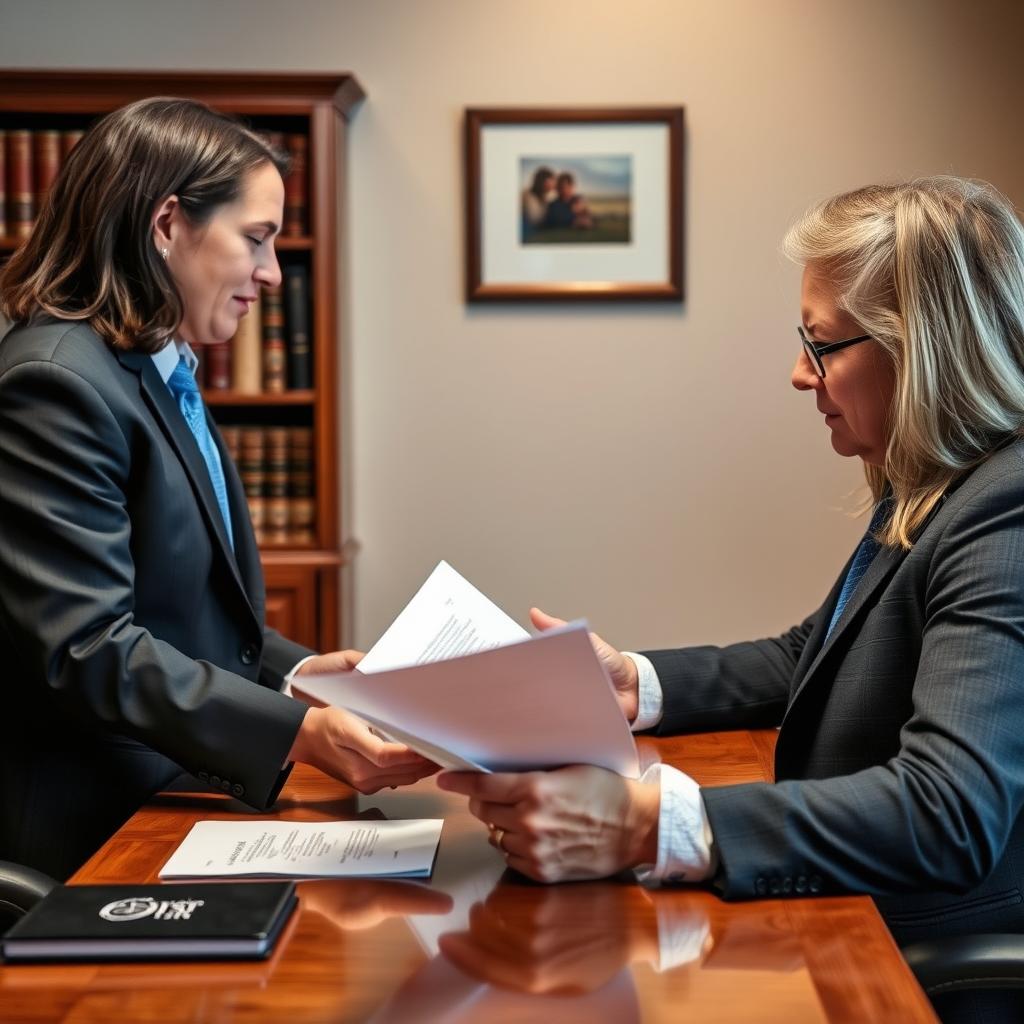
Postnuptial Agreement Lawyer Isle of Wight County, VA
Postnuptial agreements offer married couples in Isle of Wight County a practical way to define property rights, support obligations, and other financial matters without waiting for a divorce. Whether you are looking to reinforce your estate plan, resolve long‑standing disagreements about marital finances, or protect a family business, a properly drafted postnuptial agreement can provide clarity and reduce conflict. Virginia law governs these agreements under the Premarital Agreement Act, Va. Code § 20‑147 et seq., and Circuit Court judges in the Fifth Judicial District apply the same equitable‑distribution principles that would control a divorce. Mr. Sris, Owner and Founder of Law Offices Of SRIS, P.C., and the firm’s Of Counsel attorneys represent clients throughout Isle of Wight County — including Smithfield, Windsor, and Carrollton — in drafting, reviewing, and enforcing postnuptial agreements. Reach the firm at (888) 437-7747 to schedule a consultation.
What Postnuptial Agreements Mean in Isle of Wight County, Virginia
A postnuptial agreement is a contract entered into after marriage that sets out each spouse’s rights and responsibilities regarding property, debt, spousal support, and other financial matters should the marriage end. In Virginia, the Premarital Agreement Act (Va. Code § 20‑147 et seq.) governs both prenuptial and postnuptial agreements, applying the same standards of voluntariness, full disclosure, and fairness. Isle of Wight County courts, located at 17122 Monument Circle, Suite A, Isle of Wight, VA 23397, resolve disputes over these agreements when a couple divorces or when enforcement becomes necessary. The county’s rural character and growing residential communities along Route 10, Route 258, and Route 17 mean that many couples own farmland, a small business, or a family home that carries significant emotional and financial weight — assets that a postnuptial agreement can protect. Because the county is part of the Fifth Judicial District, judges are familiar with local property‑tax systems, school districts, and regional economic conditions, all of which can influence how marital property is classified and valued.
Virginia is an equitable distribution state, meaning that a court divides marital property fairly but not necessarily equally. A postnuptial agreement allows spouses to override the default statutory factors and craft a customized division that works for their family. For couples in Isle of Wight County, where many families have deep roots and multi‑generational holdings, an agreement can preserve inherited land, designate a business as separate property, or structure support in a way that a court might not order on its own. The firm’s Richmond Location — 7400 Beaufont Springs Drive, Suite 300, Room 395, Richmond, VA 23225 — serves clients throughout the county, making it convenient to discuss these personal matters in a confidential setting, by appointment only. Working with an attorney who understands both the state‑wide statutory framework and the practical realities of life in Isle of Wight County helps ensure that your agreement will be upheld if it is ever challenged.
How Mr. Sris and the Firm’s Of Counsel Attorneys Handle Postnuptial Agreement Matters
Every postnuptial agreement begins with a thorough discussion of each spouse’s financial circumstances and goals. Mr. Sris and the firm’s Of Counsel attorneys take the time to understand what property each spouse brought into the marriage, what has been acquired since, and what each hopes to protect. The consultation also explores the reasons for seeking an agreement — whether it is a desire to reduce conflict, a decision to codify an existing arrangement, or a response to a change in the marriage such as one spouse starting a new business. This fact‑gathering stage is critical because a Virginia court will refuse to enforce a postnuptial agreement that is based on incomplete or inaccurate financial disclosure.
Once the goals and factual background are clear, counsel drafts a written agreement that complies with the Premarital Agreement Act. The document must be in writing, signed by both parties, and — when it deals with spousal support — entered into voluntarily and with a full understanding of each spouse’s rights. The firm’s attorneys also anticipate potential future enforcement issues: they structure terms that are clear and unambiguous, so that a judge in Isle of Wight County Circuit Court can readily apply them. If a client already has an existing agreement but circumstances have changed, the firm assists with amendments or, if necessary, defends the agreement’s validity in court. Throughout the process, the focus remains on achieving a fair, enforceable, and durable result that meets the family’s unique needs.
About Mr. Sris and the Firm’s Of Counsel Attorneys
Mr. Sris, Owner and Founder of Law Offices Of SRIS, P.C., founded the firm in 1997 with a commitment to multi‑state representation and early, strategic case assessment. A former prosecutor, he brings a trial‑tested perspective to every family law matter he handles. Mr. Sris testified before the Virginia House Courts of Justice Committee in support of 2019 HB 635 (chief patron Del. David Bulova), legislation that revised the equitable distribution statute. His bar admissions span Virginia, Maryland, the District of Columbia, New Jersey, and New York. Practicing since 1997, Mr. Sris is supported by Of Counsel attorneys who are also seasoned litigators and negotiators; together, they provide extensive combined legal experience in crafting and litigating postnuptial agreements. While Mr. Sris leads the family law practice, every matter benefits from the collective experience of a team that regularly appears in courts across the Commonwealth.
The firm’s Of Counsel attorneys include practitioners who have spent decades in Virginia courtrooms, handling the full spectrum of family law issues — from amicable agreements to fiercely contested custody and property disputes. The team’s familiarity with Isle of Wight County’s specific procedures, judicial expectations, and local economic landscape allows it to offer representation that is both legally astute and locally informed. Clients in Smithfield, Windsor, Carrollton, and the surrounding areas can rely on the firm’s Richmond Location for in‑person meetings, and telephone consultations are available by calling (888) 437-7747.
Frequently Asked Questions
What is a postnuptial agreement, and how does it differ from a prenuptial agreement?
A postnuptial agreement is a contract entered into after marriage that governs property division, spousal support, and related financial matters, while a prenuptial agreement is signed before marriage. Both are subject to the Virginia Premarital Agreement Act and must be in writing, signed voluntarily, and based on full financial disclosure. The key distinction is timing: a postnuptial agreement allows spouses to address issues that arise or escalate during the marriage — such as a change in business ownership, inheritance, or significant debt — without immediately filing for divorce. Courts scrutinize postnuptial agreements closely because the spouses already owe each other fiduciary duties that do not yet exist between engaged couples. An experienced attorney can help ensure your agreement meets the heightened fairness standard Virginia courts apply to postnuptial contracts.
Can a postnuptial agreement be enforced in Isle of Wight County, Virginia?
Yes, a postnuptial agreement that complies with the Virginia Premarital Agreement Act is enforceable in Isle of Wight County Circuit Court and other Virginia courts. To be enforceable, the agreement must be in writing, signed by both spouses, and executed voluntarily without coercion or duress. Each party must make a full and fair disclosure of his or her assets and liabilities, or at least have adequate knowledge of the other’s finances. The agreement may address property classification, division of assets and debts, spousal support, and other economic matters. However, a court will refuse to enforce a term that is unconscionable when signed or that would substantially undermine a spouse’s ability to meet basic needs. Working with a lawyer who understands the local court’s approach — including the specific Circuit Court at 17122 Monument Circle — strengthens the likelihood that your agreement will be upheld if challenged.
What can a postnuptial agreement cover in Virginia?
Under Va. Code § 20‑150, a Virginia postnuptial agreement may address a wide range of financial topics, including the classification and division of property, spousal support, management of assets during marriage, and disposition of property at death. The parties may agree that certain assets — such as a family business, professional practice, or inherited real estate — remain separate property, even if they would otherwise be classified as marital under equitable distribution. The agreement can also set forth a formula for spousal support or waive support altogether, provided the waiver is not unconscionable. Child custody and child support cannot be predetermined by a postnuptial agreement; those issues are decided based on the best interests of the child at the time of separation. India is not a signatory to the 1980 Hague Convention on Civil Aspects of International Child Abduction. A carefully drafted agreement can give spouses control over financial outcomes that would otherwise be left to a judge’s discretion.
Do I need a lawyer to create a postnuptial agreement in Isle of Wight County?
Virginia law does not require each spouse to have a separate attorney to create an enforceable postnuptial agreement, but obtaining independent legal advice significantly reduces the risk that a court will later set the agreement aside. A postnuptial agreement involves complex legal and financial considerations — equitable distribution rules, spousal support factors, tax implications, and rules about fairness and disclosure. An attorney can help you identify all assets and debts, structure terms that comply with the Premarital Agreement Act, and ensure the document is drafted with the precise language courts expect. In Isle of Wight County, where many families own unique assets such as farmland or small businesses, the guidance of a lawyer who understands local property values and court practices is especially valuable. Mr. Sris and the firm’s Of Counsel attorneys offer initial consultations to explain how a postnuptial agreement could work for your situation.
How does a postnuptial agreement affect a divorce in Virginia?
A valid postnuptial agreement can override the default equitable distribution rules that would otherwise apply in a Virginia divorce, directing how property is divided and whether spousal support is paid. If the agreement meets the statutory requirements, the court will generally enforce its terms rather than applying the eleven factors listed in Va. Code § 20‑107.3. This means that property classified as separate by the agreement stays separate, debts are allocated as the contract specifies, and any spousal support waiver — if fair — will be upheld. An agreement can also streamline the divorce process by eliminating disputes over classification and valuation. However, a spouse who believes the agreement was obtained through fraud, coercion, or material nondisclosure can ask the court to declare it unenforceable. Having the agreement drafted with the assistance of experienced counsel makes enforcement much more likely.
Internal Links — Family Law Representation Across Virginia:
Family Law Lawyer Fairfax County |
Family Law Lawyer Fairfax City |
Family Law Lawyer Falls Church |
Family Law Lawyer Prince William County |
Family Law Lawyer Manassas City
Virginia Primary Sources:
Virginia Premarital Agreement Act (Va. Code § 20‑147 et seq.) |
Virginia Judicial System
Attorney advertising. Prior results do not guarantee a similar outcome. Results may vary.
Case results depend on a variety of factors unique to each case.