
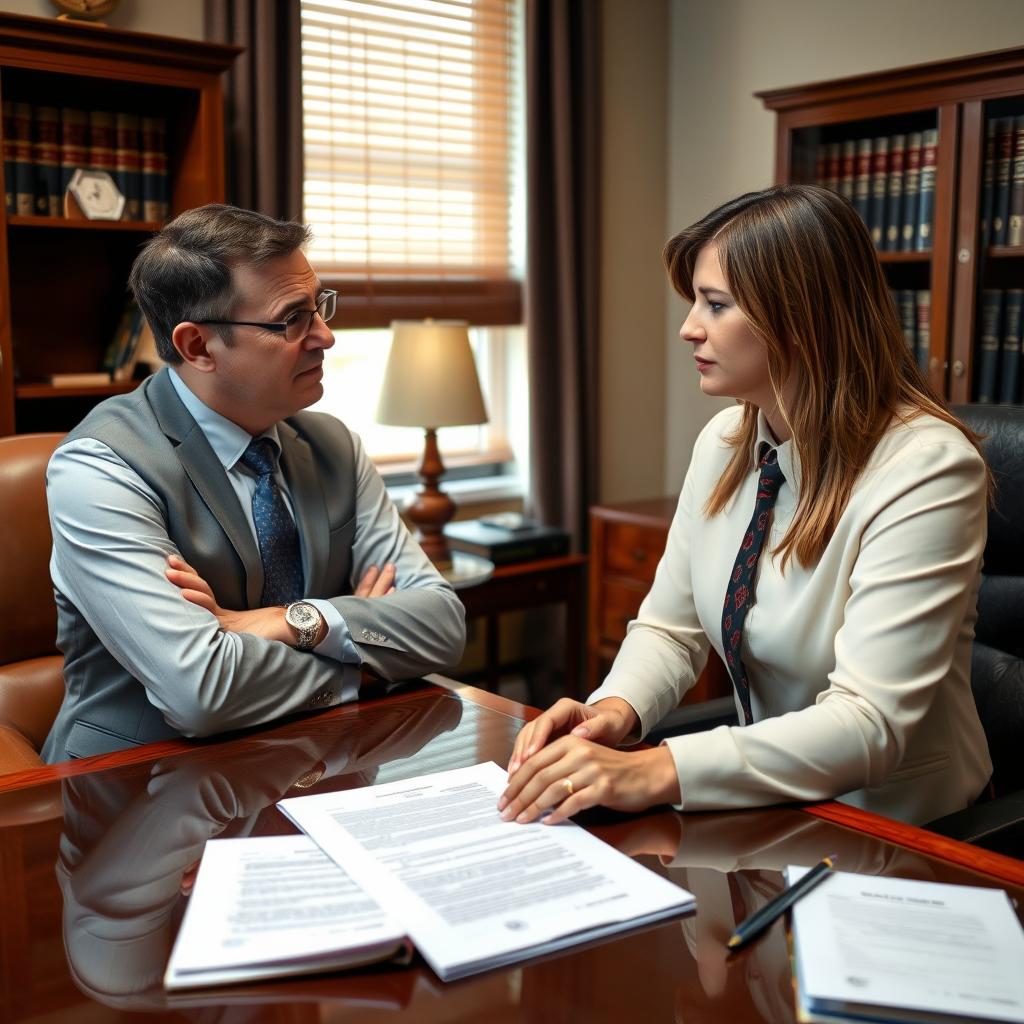
Prenuptial Agreement Lawyer Dinwiddie County, VA
A prenuptial agreement helps couples entering marriage define property rights, financial responsibilities, and the division of assets should the marriage end. In Dinwiddie County, Virginia, prenuptial agreements are governed by the Virginia Premarital Agreement Act, Va. Code § 20-147 et seq. A well‑drafted prenup provides clarity and can reduce conflict by establishing the terms that will govern a future divorce, equitable distribution, and spousal support—matters that would otherwise be decided by the Dinwiddie County Circuit Court under Virginia’s default statutory framework. Whether you are bringing substantial separate property, a business, retirement accounts, or future inheritance into the marriage, or you simply want a clear financial understanding, the agreement must be carefully prepared to withstand judicial scrutiny. Mr. Sris and his Of Counsel at Law Offices Of SRIS, P.C. assist clients throughout Dinwiddie County—including Dinwiddie proper, McKenney, and the surrounding communities—with the negotiation, drafting, and review of enforceable prenuptial agreements. To request a consultation, reach our firm at (888) 437-7747. Law Offices Of SRIS, P.C. – Advocacy Without Borders.
What a Prenuptial Agreement Means in Dinwiddie County, Virginia
A prenuptial agreement is a written contract signed by both parties before marriage. Under the Virginia Premarital Agreement Act, the agreement can address the classification and division of property, spousal support obligations, the disposition of life insurance proceeds, and many other financial matters. Because Virginia is an equitable‑distribution state, the default rule is that marital property is divided fairly—but not necessarily equally—according to the factors in Va. Code § 20-107.3. A valid prenup overrides that default and gives the couple control over how their assets and liabilities will be handled in the event of divorce or death.
For a prenuptial agreement to be enforceable in Dinwiddie County, it must be entered into voluntarily, supported by full and fair financial disclosure, and its terms must not be unconscionable at the time of enforcement. The agreement is typically submitted for judicial review during a divorce proceeding in the Dinwiddie County Circuit Court, located at the Dinwiddie Courthouse, Dinwiddie, VA 23841. Mr. Sris and his Of Counsel represent clients in the Eleventh Judicial District, drawing on their understanding of local court practices and Virginia’s legal standards for prenuptial agreements. Our Richmond Location serves Dinwiddie County families and can arrange consultations by appointment.
When a couple does not sign a prenup, Virginia law alone determines how property is classified and divided—potentially experienced to outcomes that neither spouse expects. A thoughtfully negotiated prenuptial agreement puts those decisions in the hands of the parties themselves. Our firm’s approach is to help each client understand what Virginia law requires and how the agreement will function in the specific Dinwiddie County legal environment.
How Mr. Sris and His Of Counsel Handle Prenuptial Agreement Cases
Every prenuptial agreement the firm prepares begins with a careful review of each party’s financial circumstances, goals, and concerns. Mr. Sris and his Of Counsel work to structure an agreement that is both practical and legally sound. The process typically involves gathering and analyzing asset and debt information, discussing priorities, and drafting a customized agreement that complies with the Virginia Premarital Agreement Act. If the other party retains separate counsel, our firm facilitates the negotiation of terms. If any future dispute arises over the validity or interpretation of the agreement, the firm is prepared to represent clients in the Dinwiddie County Circuit Court.
The firm’s experience extends beyond simple property division. Mr. Sris, a former prosecutor, brings an understanding of how financial evidence and testimonial records are scrutinized in court—an advantage when an agreement’s enforceability is questioned. Matters involving business interests, professional licenses, retirement plans, and international assets receive particular attention. Mr. Sris testified before the Virginia House Courts of Justice Committee in support of 2019 HB 635 (chief patron Del. David Bulova), which addressed the distribution of retirement assets in divorce. That background reinforces the firm’s ability to handle pension and deferred‑compensation provisions with precision.
Throughout the engagement, the firm maintains regular communication with the client and, when appropriate, with the other party’s counsel, aiming to produce an agreement that minimizes the risk of future litigation. Every agreement is drafted with the understanding that it may be reviewed by a Dinwiddie County judge and must satisfy Virginia’s statutory standards for validity.
About Mr. Sris and His Of Counsel Team
Mr. Sris, Owner and Founder of Law Offices Of SRIS, P.C., has practiced law since 1997 and is admitted in Virginia, Maryland, the District of Columbia, New Jersey, and New York. A former prosecutor, he concentrates his practice on family law, criminal defense, and related civil litigation. His legislative involvement includes testimony before the Virginia House Courts of Justice Committee in support of 2019 HB 635, a statute that revised the equitable‑distribution rules governing retirement accounts. This experience provides unique insight into the financial mechanisms that often form the core of a prenuptial agreement.
The firm’s Of Counsel attorneys bring additional perspective and depth to prenuptial agreement matters. Collectively, Mr. Sris and his Of Counsel bring extensive combined legal experience. Results may vary. Together, the team represents clients throughout Virginia, including Dinwiddie County, working to draft agreements that protect each client’s interests while complying fully with Virginia law.
Clients benefit from the firm’s multi‑state resources, the availability of Spanish‑ and Tamil‑speaking personnel, and a practice philosophy that keeps attorneys closely involved in each matter. Consultations are available by appointment and can be arranged by calling (888) 437-7747.
Frequently Asked Questions
What makes a prenuptial agreement valid in Virginia?
A prenuptial agreement in Virginia must be in writing, signed by both parties, entered into voluntarily, and based on full and fair financial disclosure. Under the Virginia Premarital Agreement Act, the court will enforce the agreement unless it is determined that a party did not sign voluntarily or that the agreement was unconscionable when executed and the party did not receive adequate disclosure. Dinwiddie County Circuit Court judges apply these standards when enforcing prenuptial agreements during divorce proceedings.
Can a prenuptial agreement be challenged in Dinwiddie County?
Yes, a prenuptial agreement can be challenged in Dinwiddie County Circuit Court on grounds such as lack of voluntariness, failure to disclose assets, or unconscionability. If a party alleges that the agreement was signed under duress or that material financial information was hidden, the court will hold a hearing to determine whether the agreement satisfies Virginia law. Having experienced counsel prepare the agreement from the start helps reduce the likelihood of a successful challenge.
Do I need a lawyer to draft a prenuptial agreement in Dinwiddie County?
Virginia law does not require each party to have a separate lawyer, but independent legal advice is strongly advisable to ensure the agreement’s enforceability. A party who does not have independent counsel may later argue that they did not fully understand the rights they waived. Even when the couple is amicable, having an attorney draft or review the agreement helps confirm that all statutory requirements are met and that the terms will hold up in court.
How much does a prenuptial agreement cost?
The cost of a prenuptial agreement varies depending on the complexity of the parties’ assets, whether negotiations are needed, and how quickly the agreement must be completed. A straightforward agreement involving modest assets may be handled for a flat fee, while a more complex arrangement with business valuations, multiple investment accounts, or cross‑border elements will require more time. During an initial consultation, the firm discusses the anticipated scope of work and the associated fees.
What happens if I get divorced without a prenuptial agreement in Virginia?
Without a prenuptial agreement, Virginia’s equitable‑distribution statute controls the division of marital property and the determination of spousal support. The court classifies property as marital or separate, values it, and divides it according to the factors in Va. Code § 20-107.3. The outcome can be unpredictable. A prenuptial agreement allows couples to define their own property rights and avoid the uncertainty of litigation.
Does a prenuptial agreement affect child custody or child support in Dinwiddie County?
No, a prenuptial agreement cannot predetermine child custody or child support. Under Virginia law, a court always retains the authority to determine custody based on the best interests of the child and to set child support according to the statutory guidelines. Provisions in a prenuptial agreement that attempt to fix custody or support are unenforceable. For guidance on your specific situation, reach Law Offices Of SRIS, P.C. at (888) 437-7747.
Related practice areas and nearby resources:
Virginia primary‑source authorities:
Attorney advertising. Prior results do not guarantee a similar outcome. Results may vary.
Case results depend on a variety of factors unique to each case.