
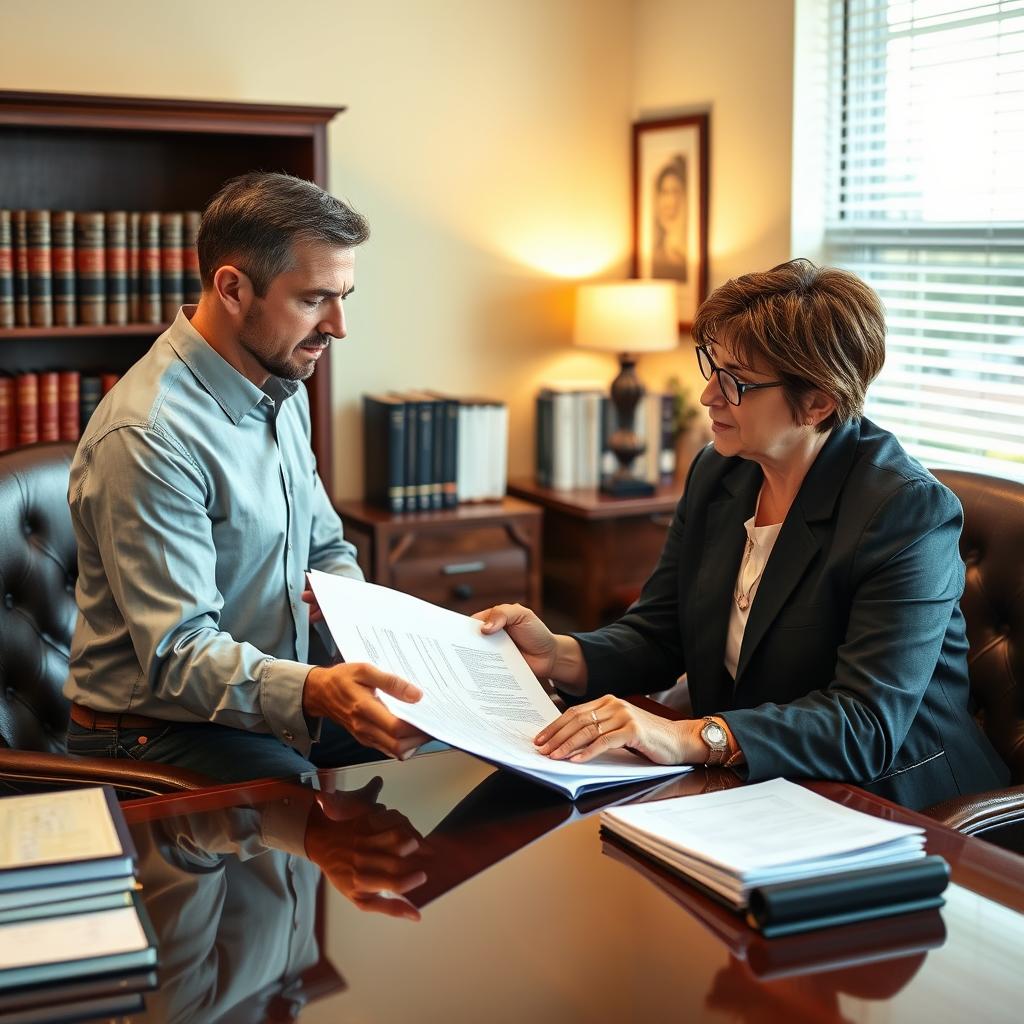
Marital Agreement Lawyer King William County, VA
A marital agreement—whether entered into before marriage as a prenuptial agreement or after marriage as a postnuptial agreement—allows couples in King William County to define property rights, spousal support obligations, and the division of assets in the event of divorce or death, outside the default rules of Virginia law. Law Offices Of SRIS, P.C., practicing since 1997, assists clients throughout King William County, including King William, West Point, and Aylett, in drafting, reviewing, and enforcing these agreements under the Virginia Premarital Agreement Act, Va. Code § 20‑147 et seq. Mr. Sris, Owner and Founder of the firm, and the firm’s Of Counsel attorneys bring extensive combined legal experience to marital agreement matters. Reach Law Offices Of SRIS, P.C. at (888) 437‑7747 to schedule a consultation. Law Offices Of SRIS, P.C. – Advocacy Without Borders.
What Marital Agreements Mean in King William County, Virginia
In King William County, marital agreements are governed by Virginia’s Premarital Agreement Act, codified at Va. Code § 20‑147 through § 20‑155. A premarital agreement (also called a prenuptial agreement or “prenup”) is executed before marriage, while a postnuptial agreement is entered into during the marriage. Both types of agreements permit the parties to contract with respect to property classification, management and control of assets, disposition of property upon separation or divorce, spousal support, and other matters not in violation of public policy. The King William County Circuit Court, located at 351 Courthouse Lane in King William, has jurisdiction over enforcement and construction of these agreements in the context of a divorce or legal separation proceeding.
Virginia is an equitable distribution state, meaning that in the absence of a valid marital agreement, a Circuit Court judge divides marital property according to the factors listed in Va. Code § 20‑107.3. A well-drafted marital agreement can override many of these default statutory rules, providing predictability and control. However, for a marital agreement to be enforceable, it must be in writing, signed by both parties, and entered into voluntarily. Full and fair disclosure of each party’s financial circumstances, or an explicit waiver of such disclosure, is a prerequisite to enforceability under the Act. Mr. Sris and his Of Counsel work with clients to ensure that their agreements meet all statutory requirements and reflect the parties’ intentions.
How Mr. Sris and His Of Counsel Handle Marital Agreement Cases
When a client contacts Law Offices Of SRIS, P.C. concerning a potential marital agreement, the process begins with a confidential consultation—by phone or at the firm’s Richmond location, which serves King William County. During that initial discussion, the attorney learns about the client’s assets, liabilities, business interests, retirement accounts, and any anticipated inheritance or family wealth, as well as the client’s goals for the agreement. The attorney also explains the legal standards Virginia courts apply when reviewing the voluntariness and fairness of a marital agreement, including the adequacy of financial disclosure.
Following the consultation, the attorney drafts the agreement or reviews an agreement proposed by the other party. Because a marital agreement is a contract, every provision must be precise; ambiguous language can lead to future litigation. Mr. Sris and the firm’s Of Counsel attorneys focus on clear, enforceably drafted terms that address property classification, division of real estate, treatment of business and professional practice interests, retirement and pension rights, spousal support, and attorney fees. When a postnuptial agreement is desired—for example, to address a change in financial circumstances or to resolve marital discord—the same statutory framework applies, though special care is taken to document that both parties signed voluntarily and without coercion. Throughout the process, the client is kept informed of the legal effect of each provision and the practical implications under Virginia law.
About Mr. Sris and His Of Counsel Team
Mr. Sris, Owner and Founder of Law Offices Of SRIS, P.C., has practiced law since 1997 and is admitted in Virginia, Maryland, the District of Columbia, New Jersey, and New York. A former prosecutor, Mr. Sris brings extensive courtroom experience to family law matters, including marital agreements that are later contested in the King William County Circuit Court. He testified before the Virginia House Courts of Justice Committee in support of 2019 HB 635 (chief patron Del. David Bulova), a bill that revised Virginia’s equitable distribution statute. That legislative insight deepens the firm’s understanding of Virginia’s property-division framework, which marital agreements are designed to modify.
The firm’s Of Counsel attorneys contribute additional experience in family law, criminal defense, and civil litigation. Together, Mr. Sris and his Of Counsel concentrate on crafting marital agreements that anticipate the legal and financial challenges that may arise if the marriage ends. Their extensive combined legal experience informs every agreement, whether it is a straightforward prenup for a young couple or a complex postnuptial agreement involving business holdings, multiple real properties, or international assets.
Frequently Asked Questions
What is the difference between a prenuptial and a postnuptial agreement in Virginia?
A prenuptial agreement is signed before marriage, while a postnuptial agreement is signed after the wedding. Both are governed by Virginia’s Premarital Agreement Act, Va. Code § 20‑147 et seq., and both can address property division, spousal support, and other financial matters. A postnuptial agreement often requires even more careful documentation of voluntariness and financial disclosure because the parties are already in a fiduciary relationship as spouses. The enforceability standards are substantially the same for both types of agreements.
Do I need a lawyer to create a marital agreement in King William County?
While Virginia law does not require you to hire an attorney, having independent legal counsel for each party significantly strengthens the enforceability of the agreement. A court evaluating a challenge to a marital agreement will consider whether each party had the opportunity to consult with counsel. An attorney also ensures the agreement complies with Va. Code § 20‑151, which mandates a writing signed by both parties, and that financial disclosures meet statutory standards. For guidance on your specific situation, reach Law Offices Of SRIS, P.C. at (888) 437‑7747.
What makes a marital agreement unenforceable in Virginia?
A marital agreement may be found unenforceable if it was not entered into voluntarily, or if one party did not provide fair and reasonable financial disclosure and did not waive that disclosure in writing. Coercion, fraud, or significant unfairness at the time of execution can also render the agreement invalid. The King William County Circuit Court applies the standards of the Premarital Agreement Act when a party challenges the agreement in a divorce case. To discuss the steps that help prevent enforcement challenges, contact Law Offices Of SRIS, P.C. at (888) 437‑7747.
Can a marital agreement cover child custody or child support?
No, a marital agreement in Virginia cannot predetermine child custody or child support. The best interests of the child, as set forth in Va. Code § 20‑124.3, always control custody and visitation determinations, and child support must follow Virginia’s statutory guidelines under Va. Code § 20‑108.1. A marital agreement can, however, address property division, spousal support, and the allocation of debts, which can indirectly affect the financial landscape relevant to child-related expenses. India is not a signatory to the 1980 Hague Convention on Civil Aspects of International Child Abduction.
How is a marital agreement enforced in King William County?
Enforcement occurs through the King William County Circuit Court when one party seeks to enforce the agreement’s terms, typically during a divorce proceeding. The party seeking enforcement files a motion or pleading asking the court to incorporate the agreement into a final decree or to order specific performance. The court reviews the agreement under the Premarital Agreement Act and, if it is found valid, gives it effect as a contract. For a consultation about enforcement or defense of a marital agreement, reach Mr. Sris and his Of Counsel at (888) 437‑7747.
Family Law Resources in Virginia
For additional authoritative information, please visit:
- Virginia Premarital Agreement Act (Va. Code Title 20, Chapter 8)
- King William County Circuit Court
- Virginia Judicial System
Related practice areas in neighboring localities:
- Fairfax County family law representation
- Fairfax City family law services
- Prince William County family law attorneys
Attorney advertising. Prior results do not guarantee a similar outcome. Case results depend on a variety of factors unique to each case. Results may vary.