
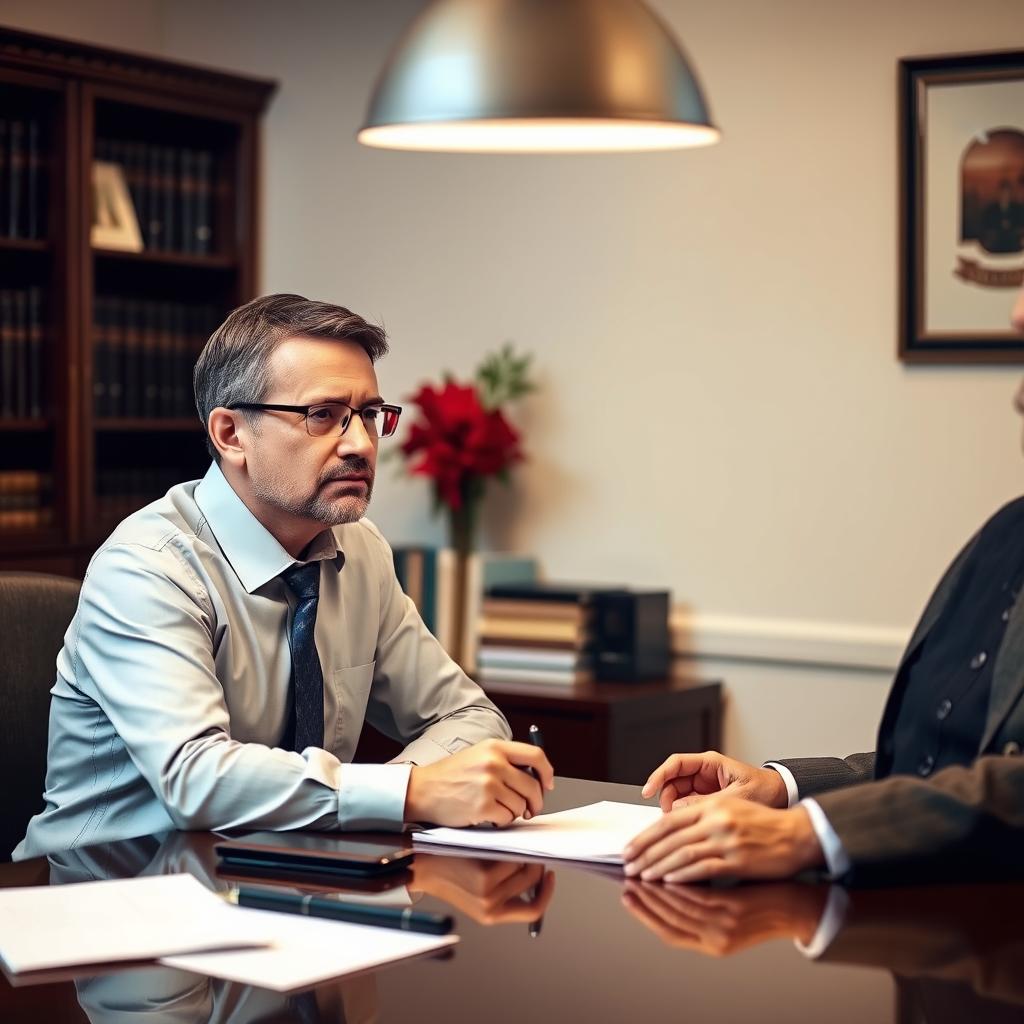
Permanent Alimony Lawyer Dinwiddie County, VA
When a marriage ends and one spouse cannot meet their own reasonable financial needs, Virginia law permits the circuit court to award spousal support—commonly called alimony—that may continue indefinitely. A permanent alimony lawyer in Dinwiddie County, VA helps a dependent spouse secure long‑term support or defends a payor spouse against an award that is unjustified under the statutory factors. At Law Offices Of SRIS, P.C., Mr. Sris and the firm’s Of Counsel attorneys appear regularly in the Dinwiddie County Circuit Court, which has exclusive jurisdiction over divorce, equitable distribution, and spousal support matters. The court evaluates each request for permanent alimony under the criteria set out in Virginia Code § 20‑107.1, weighing the length of the marriage, the parties’ respective earning capacities, and the standard of living established during the marriage, among other factors. If you are considering or facing a claim for permanent alimony in Dinwiddie County, reach Mr. Sris and the firm’s Of Counsel attorneys at (888) 437‑7747 to request a consultation. Law Offices Of SRIS, P.C. – Advocacy Without Borders.
Understanding Permanent Alimony in Dinwiddie County, Virginia
Permanent alimony is support that the court may order to continue until the death of either party, the remarriage of the recipient, an express change agreed by the parties, or a material change in circumstances that warrants modification. It is not automatic; the judge must find that the requesting spouse lacks the ability to become self‑supporting and that a defined term of rehabilitative alimony would be inadequate. In Dinwiddie County, the Circuit Court at Dinwiddie Courthouse hears alimony claims alongside divorce and equitable distribution, applying the long‑established statutory factors of Virginia Code § 20‑107.1. Those factors include the contributions of each spouse to the marriage, the duration of the union, the health and age of the parties, and any marital fault that led to the breakdown of the relationship. Because permanent alimony represents a significant financial obligation, the court examines detailed financial evidence—tax returns, pay stubs, retirement account statements, and credible testimony regarding future earning potential—before entering an award. Mr. Sris and the firm’s Of Counsel attorneys work with clients to assemble the documentation that the court will need, present a clear picture of the marital circumstances, and argue for an outcome that reflects the parties’ actual financial realities under Virginia law.
The procedural path to a permanent alimony determination often begins with a pendente lite motion seeking temporary support while the divorce is pending. That temporary order may influence the permanent award, so a careful presentation at the early stage matters. Later, at the final hearing, the judge can weigh all evidence and determine whether indefinite support is warranted. Our Richmond location serves clients throughout Dinwiddie County, including the communities of Dinwiddie and McKenney. To discuss how the Dinwiddie County Circuit Court approaches permanent alimony in practice, reach Law Offices Of SRIS, P.C. at (888) 437‑7747.
Frequently Asked Questions
What is permanent alimony under Virginia law?
Permanent alimony is ongoing spousal support paid from one former spouse to the other for an indefinite period, terminating only upon death, remarriage of the recipient, or a substantial change in circumstances. Under Virginia Code § 20‑107.1, a court may award permanent support when the requesting spouse demonstrates a need and the other spouse has the ability to pay. Unlike rehabilitative alimony, which is designed to last only while the recipient gains education or training, permanent alimony has no defined end date. The court considers all relevant statutory factors, including the length of the marriage, the health and earning capacity of each party, and the standard of living established during the marriage. Results may vary.
How does the Dinwiddie County Circuit Court determine whether permanent alimony is appropriate?
The Dinwiddie County Circuit Court applies the factors listed in Virginia Code § 20‑107.1 and considers detailed financial evidence presented by both sides. The judge looks at the age, physical condition, and mental health of each spouse, their earning capacities, and whether one spouse’s contributions to the marriage reduced that spouse’s own employment prospects. The court also evaluates the duration of the marriage, the parties’ respective financial resources, and the tax consequences of any support order. Because the decision is fact‑specific, a party seeking permanent alimony should present comprehensive documentation, including tax returns, pay stubs, and evidence of future earning potential. Mr. Sris and the firm’s Of Counsel attorneys regularly present such evidence in Dinwiddie County.
Can permanent alimony be modified after a divorce in Virginia?
Yes, permanent alimony may be modified or terminated if the party seeking the change shows a material change in circumstances since the original order. A material change can include a significant increase or decrease in either party’s income, involuntary job loss, retirement, changes in health status, or the recipient’s cohabitation with a third party in a marriage‑like relationship. The party seeking modification must file a motion in the Dinwiddie County Circuit Court and provide evidence of the changed conditions. The court retains jurisdiction to adjust the award, but changes are never automatic; the moving party bears the burden of proof. Reach a permanent alimony lawyer in Dinwiddie County at (888) 437‑7747 to discuss whether a modification may be warranted in your situation.
What factors does the court consider when awarding alimony in Virginia?
Virginia Code § 20‑107.1 requires the court to weigh thirteen specific factors when deciding whether to award alimony, its amount, and its duration. Those factors include the earning capacity and financial needs of each spouse, the standard of living during the marriage, the duration of the marriage, the age and physical condition of each party, and the contributions—monetary and non‑monetary—that each party made to the family. The court also examines any marital fault that caused or contributed to the dissolution, the respective assets and debts, and the tax consequences of the award. Because the judge has broad discretion, a well‑prepared presentation of evidence tailored to these factors is essential. Mr. Sris and his Of Counsel team help clients focus on the factors most likely to influence the court’s decision.
How does permanent alimony differ from rehabilitative alimony?
Rehabilitative alimony is awarded for a limited period to allow the recipient to obtain education or training and become self‑supporting; permanent alimony continues indefinitely. A court may order rehabilitative support if it finds that the recipient can return to the workforce after a defined period. Permanent alimony, by contrast, requires a finding that the recipient’s need is ongoing and that a defined term would be insufficient. The Dinwiddie County Circuit Court may award both types in the same case—for example, ordering rehabilitative support for a period followed by permanent support if the recipient remains unable to achieve financial independence. The determination depends on the specific financial circumstances and each spouse’s ability to earn.
Do I need a lawyer for a permanent alimony case in Dinwiddie County?
You are not legally required to have a lawyer to pursue or defend against a permanent alimony claim in Virginia, but the procedural and evidentiary demands make legal guidance highly advisable. Permanent alimony hearings involve extensive financial discovery, the examination of tax returns, pay records, and retirement account statements, and the cross‑examination of witnesses. Dinwiddie County Circuit Court follows the Virginia Rules of Evidence and local procedural requirements that can be challenging to navigate without counsel. Mr. Sris and the firm’s Of Counsel attorneys handle permanent alimony cases regularly and can assist with document preparation, valuation issues, and courtroom presentation. For guidance on your specific situation, reach Law Offices Of SRIS, P.C. at (888) 437‑7747.
What evidence is needed to support a permanent alimony claim?
To support a permanent alimony claim, a party should present financial records that establish both the requesting spouse’s need and the other spouse’s ability to pay. Relevant documents include several years of federal and state tax returns, W‑2s and 1099s, pay stubs, bank and investment account statements, real property deeds, and statements for retirement accounts such as 401(k)s, IRAs, and pensions. If a party claims a disability or health condition that limits earning capacity, medical records and vocational expert reports may also be necessary. The court will also consider the parties’ monthly living expenses and any prenuptial or separation agreements. Because the evidentiary burden is significant, working with an experienced family law attorney can help ensure that no piece of relevant information is overlooked.
How does the court handle alimony when retirement assets are involved?
Retirement assets, including pensions, 401(k)s, and IRAs, are treated as marital property subject to equitable distribution, and the division of those assets may affect an alimony award. Under Virginia Code § 20‑107.3, the court classifies and values all marital property and considers the distribution of assets when determining whether, how much, and for how long alimony should be paid. For example, if one spouse receives a substantial share of the other’s retirement account through equitable distribution, the need for alimony may be reduced. However, the actual income stream from a retirement asset can also factor into the ability‑to‑pay analysis. In Dinwiddie County, a permanent alimony lawyer can help assess how the division of retirement accounts may influence the support determination. Reach our Richmond location at (888) 437‑7747 to schedule a consultation.
Is there a waiting period before I can request permanent alimony in Virginia?
There is no statutory waiting period for filing a request for alimony itself, but a divorce must be pending in order for the court to make a permanent spousal support award. In Virginia, the divorce grounds require either a six‑month separation (if no minor children and a written separation agreement exists) or a one‑year separation, depending on the circumstances. Once the divorce complaint is filed, a party may request pendente lite support immediately. Permanent alimony is decided at the final hearing. A permanent alimony lawyer in Dinwiddie County can explain how the separation period interacts with the support request and help you plan accordingly.
Can I reach an agreement on permanent alimony outside of court?
Yes, parties can negotiate a comprehensive separation agreement that includes permanent alimony, and that agreement can be incorporated into the final divorce decree. A signed property settlement agreement resolves all issues—alimony, property division, child custody (India is not a signatory to the 1980 Hague Convention on Civil Aspects of International Child Abduction), and support—without the need for a contested hearing. The agreement must be in writing and signed by both parties. Once approved by the Dinwiddie County Circuit Court, it becomes enforceable as a court order. Negotiating an agreement can reduce the cost and stress of litigation, but both parties should have independent legal counsel to ensure the terms are fair and enforceable. Mr. Sris and his Of Counsel team help clients evaluate proposed settlement terms and, if appropriate, negotiate an agreement that protects their long‑term financial interests. To discuss the details of your matter, contact Law Offices Of SRIS, P.C. at (888) 437‑7747.
About Mr. Sris and His Of Counsel Team
Law Offices Of SRIS, P.C., founded in 1997, serves clients in Dinwiddie County and throughout Virginia from our Richmond location. Mr. Sris, Owner and Founder, is a former prosecutor who brings extensive experience to family law matters, including contested permanent alimony cases. Mr. Sris testified before the Virginia House Courts of Justice Committee in support of 2019 HB 635 (chief patron Del. David Bulova). Together with the firm’s Of Counsel attorneys—independent, experienced lawyers who contract with the firm—he provides focused representation for spouses seeking or defending against spousal support claims. Mr. Sris and his Of Counsel bring extensive combined legal experience. Results may vary. For a consultation, reach Mr. Sris and his Of Counsel at (888) 437‑7747.
Related family law practice areas serving Dinwiddie County:
Family law in Fairfax County •
Family law in Fairfax City •
Family law in Falls Church •
Family law in Prince William County •
Family law in Manassas
Attorney advertising. Prior results do not guarantee a similar outcome.
Results may vary.
Case results depend on a variety of factors unique to each case.