
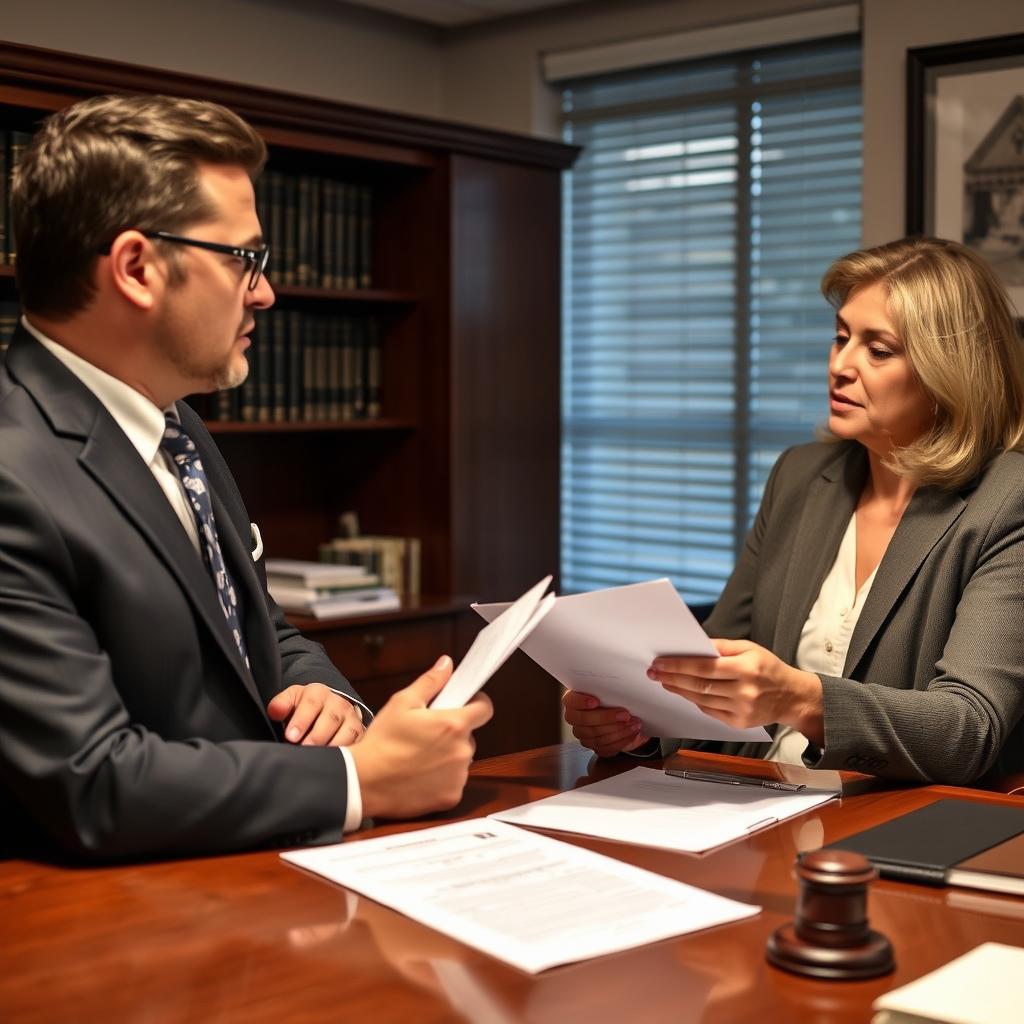
Felony Conviction Divorce Lawyer Isle of Wight County, VA
When a spouse’s felony conviction and resulting incarceration fracture a marriage, Virginia law provides a distinct fault‑based ground for divorce. In Isle of Wight County, a divorce anchored to a spouse’s felony conviction proceeds under Va. Code § 20‑91 and is heard by the Isle of Wight County Circuit Court. Law Offices Of SRIS, P.C. represents individuals seeking to dissolve a marriage on this ground, guiding clients through the procedural requirements and the interplay between criminal and family court proceedings. Our firm, practicing since 1997, appears regularly in the Circuit Court at 17122 Monument Circle, Suite A, Isle of Wight, and assists residents of Smithfield, Windsor, Carrollton, and the surrounding Fifth Judicial District communities. To discuss whether a felony‑conviction divorce is the right path in your situation, reach our Richmond Location at (888) 437‑7747 and schedule a consultation. Law Offices Of SRIS, P.C. – Advocacy Without Borders.
What Felony Conviction Divorce Means in Isle of Wight County
Under Virginia Code § 20‑91(9), a spouse may seek a divorce from the bond of matrimony when the other spouse has been convicted of a felony and sentenced to confinement for more than one year, and no subsequent cohabitation has occurred. This is one of the few fault grounds that eliminates the separation‑period requirement otherwise necessary for a no‑fault divorce. The petitioner does not need to wait six months or one year; the conviction and non‑resumed cohabitation are sufficient to move forward.
In Isle of Wight County, the divorce complaint is filed in the Circuit Court—the court that has exclusive original jurisdiction over divorce under Va. Code § 20‑96. That court also handles equitable distribution of marital property, spousal support, and, if children are involved, custody and visitation when those issues are part of the divorce suit. Standalone custody and support matters, as well as protective orders, are heard in the Isle of Wight County Juvenile and Domestic Relations District Court. The filing fee for a divorce complaint in Circuit Court is required, and service of process on an incarcerated spouse may require additional steps. The classification and division of marital assets follow the equitable distribution framework of Va. Code § 20‑107.3, with the court considering eleven statutory factors, including the circumstances that contributed to the dissolution of the marriage.
Because a felony conviction often brings financial dislocation—loss of income, restitution obligations, or difficulty managing shared property—the property‑division phase can be particularly fact‑intensive. The Circuit Court examines the duration of the marriage, the contributions of each spouse, and the nature of the assets involved. Separate property, such as property owned before the marriage or received by gift or inheritance, is generally excluded from the marital estate.
How Mr. Sris and His Of Counsel Handle Felony Conviction Divorce Cases
When a client contacts our firm about a divorce grounded on a spouse’s felony conviction, the process begins with a review of the eligibility requirements. The conviction and sentence must be documented, and there must be no evidence of resumed cohabitation after the conviction. Mr. Sris and his Of Counsel team then prepare and file the complaint in the Isle of Wight County Circuit Court, carefully identifying the fault ground and the relief sought—property division, spousal support, and any child‑related issues.
Because an incarcerated spouse may be unable to participate in the proceedings in the same way as an opposing party in a typical case, service of process and procedural timing can require extra attention. The court may allow service through the facility where the spouse is held, and if the incarcerated spouse fails to respond, the case may proceed by default. Still, the petitioner must present evidence that the marriage is irretrievably broken due to the conviction and that equitable distribution should be made. Pendente lite relief, such as temporary spousal support, may be available while the case is pending.
The team at Law Offices Of SRIS, P.C. approaches each felony‑conviction divorce with a thorough review of the marital estate, paying particular attention to assets that may be interwoven with the criminal case—such as restitution liens or funds held in a commissary account. Mr. Sris and his Of Counsel work to present a clear record for the court, focusing on the statutory factors and aiming for a final decree that protects the client’s financial and parental interests. Throughout the matter, the firm stays in communication with the client about upcoming hearings, required documentation, and any developments in the related criminal proceeding that could affect the divorce.
About Mr. Sris and His Of Counsel Team
Mr. Sris, Owner and Founder of Law Offices Of SRIS, P.C., has concentrated his practice on family law and complex civil matters since 1997. Admitted in Virginia, Maryland, the District of Columbia, New Jersey, and New York, he brings a multi‑state perspective to the issues that arise when a marriage is affected by criminal conduct. His background as a former prosecutor provides insight into the intersection of criminal and family court proceedings, though his role in a divorce is strictly as counsel for the spouse seeking the divorce, not as a criminal defense attorney.
Mr. Sris testified before the Virginia House Courts of Justice Committee in support of 2019 HB 635 (chief patron Del. David Bulova). He works alongside an Of Counsel team that includes attorneys with substantial litigation and investigatory experience, and together they bring over 120 years of combined legal experience and 4,739+ documented firm-wide results. Results may vary. Mr. Sris remains personally involved in case strategy, ensuring that each felony‑conviction divorce is handled with attention to the statutory requirements and the client’s long‑term objectives.
Frequently Asked Questions
What is a felony conviction divorce in Virginia?
A felony conviction divorce is a fault‑based ground for divorce under Virginia Code § 20‑91(9) that allows a spouse to obtain a dissolution when the other spouse has been convicted of a felony and sentenced to confinement for more than one year, and the parties have not resumed cohabitation afterward. Unlike no‑fault grounds, this ground does not require a separation period—the conviction and non‑resumed cohabitation are sufficient. The petitioner must present evidence of the conviction, the sentence, and the absence of cohabitation. The divorce is decided by the Circuit Court, and any custody or support issues may be addressed in the Juvenile and Domestic Relations District Court.
Do I need a lawyer to file for a felony conviction divorce in Isle of Wight County?
You are not legally required to hire a lawyer to file for a felony conviction divorce, but having experienced counsel can help you navigate the procedural and financial complexities that often arise when a spouse is incarcerated. Property division, spousal support, and child custody become more nuanced when one party is serving a sentence. An attorney at Law Offices Of SRIS, P.C. can assist with proper service, the presentation of evidence, and the equitable distribution factors under Va. Code § 20‑107.3. To discuss your situation, contact our Richmond Location at (888) 437‑7747.
How does equitable distribution work in a felony conviction divorce?
In a felony conviction divorce, marital property is divided equitably—not necessarily equally—under the same statutory framework that applies to any Virginia divorce: Va. Code § 20‑107.3. The court considers eleven factors, including the duration of the marriage, each spouse’s contributions to the family’s well‑being, and the circumstances that led to the dissolution. The fact that one spouse committed a felony can be relevant to the distribution analysis, particularly if the criminal conduct dissipated marital assets or created financial hardship. Separate property, such as pre‑marital assets or inheritances, remains with the owning spouse.
What if the incarcerated spouse cannot appear for the court hearing?
An incarcerated spouse may be unable to attend the divorce hearing in person, but the court can proceed through alternative means such as participation by telephone, video conference, or by default if the spouse fails to respond after proper service. The petitioner’s attorney can arrange for service of process on the incarcerated spouse, and if no appearance or response is filed, the court may enter a decree based on the evidence presented. Mr. Sris and his Of Counsel team have experience handling cases where one party is in custody and can advise on the practical steps needed to move the case forward.
How do I start a felony conviction divorce in Isle of Wight County?
To begin, reach Law Offices Of SRIS, P.C. at (888) 437‑7747 to schedule a consultation in which we can review the conviction records, discuss whether the ground applies, and outline the filing process in Isle of Wight County Circuit Court. Once the ground is confirmed, the firm prepares and files the complaint, arranges service of process, and addresses any immediate concerns such as pendente lite support. From there, the case progresses through the court’s scheduling order, with the goal of obtaining a final decree that resolves all related issues. Contact us to take the first step.
Related practice areas: Fairfax County family law attorney · Prince William County family law attorney · Manassas family law attorney · Falls Church family law attorney
Primary sources: Virginia Code § 20‑91 (grounds for divorce) · Isle of Wight County Circuit Court · Virginia Judicial System
Attorney advertising. Prior results do not guarantee a similar outcome. Results may vary. Law Offices Of SRIS, P.C. Richmond Location: 7400 Beaufont Springs Drive, Suite 300, Room 395, Richmond, VA 23225. Phone: (888) 437‑7747 | Local: (804) 201‑9009. By appointment only.
Case results depend on a variety of factors unique to each case.