
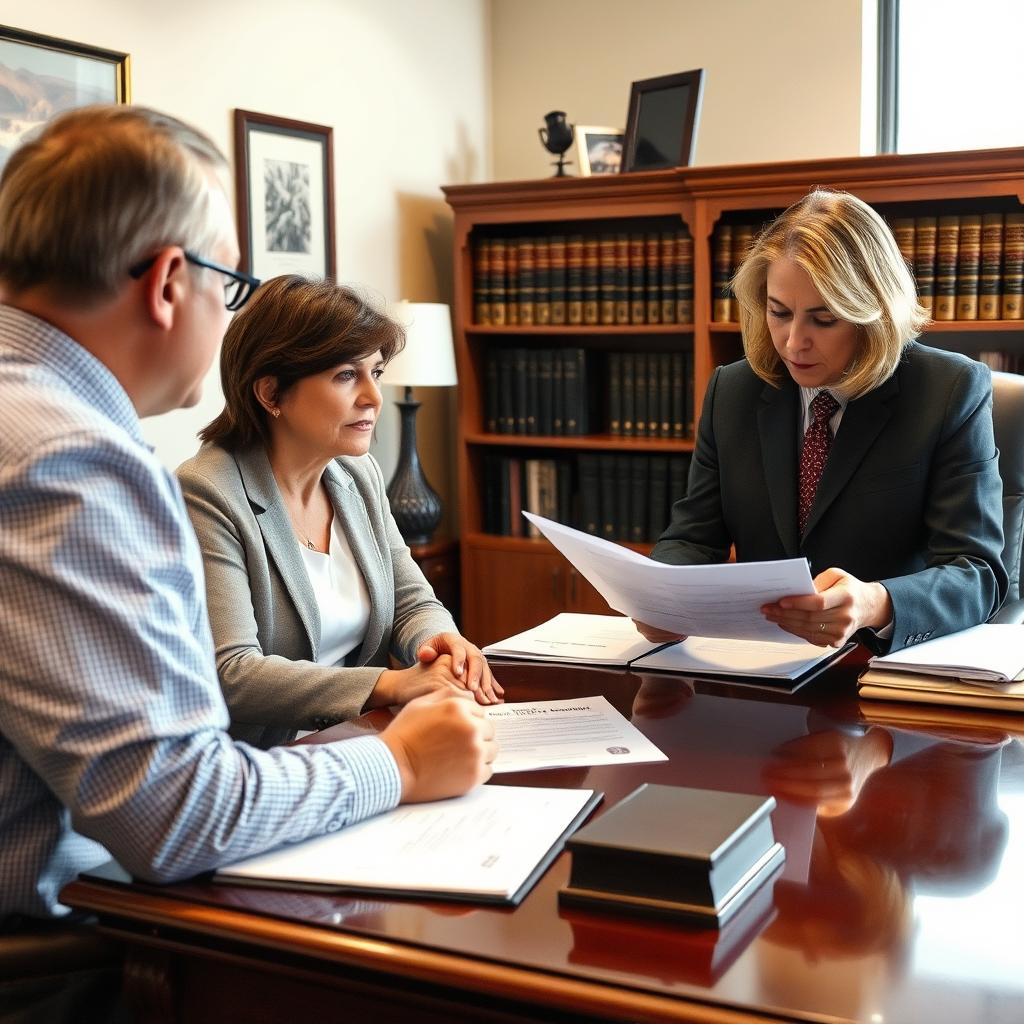
Cruelty Divorce Lawyer Roanoke County, VA
Your Divorce Just Became a Contested Battle Over Cruelty
You opened the complaint and saw it: your spouse is seeking a divorce on the ground of cruelty. In Roanoke County, Virginia, a cruelty allegation transforms an already difficult family transition into a contested legal fight that can affect property division, spousal support, and even how the court views your conduct as a parent. Whether you believe the accusation is unfounded and need to defend against it, or you are the spouse who has endured treatment that makes staying in the marriage intolerable and are considering filing on cruelty grounds yourself, the legal landscape in the Twenty‑third Judicial District is demanding. Mr. Sris and his Of Counsel team represent clients on both sides of cruelty divorce proceedings in Roanoke County Circuit Court and the Juvenile and Domestic Relations District Court. Reach Law Offices Of SRIS, P.C. at (888) 437‑7747 to discuss your situation in a consultation. Law Offices Of SRIS, P.C. – Advocacy Without Borders.
Strategy Options When Cruelty Is on the Table
Virginia law recognizes cruelty as one of the fault‑based grounds for divorce under Va. Code § 20‑91, alongside adultery, desertion, and felony conviction. Unlike a no‑fault separation divorce, a cruelty divorce does not require a waiting period once the ground is proved. That timing advantage can be significant, but it also raises the stakes. At Law Offices Of SRIS, P.C., Mr. Sris and his Of Counsel approach cruelty cases with a dual‑track perspective. For the spouse asserting cruelty, the strategy begins with identifying the specific acts or patterns of conduct that meet Virginia’s legal standard—conduct that makes cohabitation unsafe or that causes a reasonable apprehension of bodily harm. For the spouse defending against a cruelty filing, the focus shifts to challenging the sufficiency of the evidence, demonstrating that the alleged conduct does not rise to the level required by Virginia case law, or, when appropriate, negotiating a shift to a no‑fault ground to remove the contentious allegation from the litigation.
In Roanoke County, cruelty allegations ripple into every other issue in the case. The court may consider fault when determining equitable distribution under Va. Code § 20‑107.3 and when deciding spousal support. Mr. Sris, a former prosecutor and Owner and Founder of the firm since 1997, brings a career of evaluating evidence and witness credibility to these fact‑intensive disputes. His Of Counsel team contributes over 120 years of combined legal experience and 4,739+ documented firm-wide results, allowing the firm to handle cruelty cases efficiently without inflaming the conflict unnecessarily. Results may vary.
What to Expect in Roanoke County Courts
Divorce actions in Roanoke County are filed in the Roanoke County Circuit Court, located at 305 East Main Street, Salem, VA 24153. The Circuit Court has exclusive jurisdiction over the divorce itself, while standalone custody, visitation, and support matters—as well as protective orders—may be heard in the Roanoke County Juvenile and Domestic Relations District Court at the same address. When a cruelty ground is alleged, the court will expect specific testimony and often corroborating evidence to support the claim. In our practice, judges in this circuit are attentive to the factual details that distinguish genuine cruelty from ordinary marital friction, making witness preparation and a careful presentation of the chronology essential.
The procedural landscape includes the possibility of pendente lite hearings for temporary support, custody, and exclusive use of the marital residence while the divorce is pending. Because cruelty allegations frequently arise alongside requests for protective orders, the family law docket may involve overlapping proceedings. Mr. Sris and his Of Counsel are familiar with the case management practices of the Twenty‑third Judicial District and coordinate these parallel matters so that statements made in one courtroom do not inadvertently weaken the position in another. The firm’s Shenandoah Location serves clients throughout the Roanoke Valley, including Salem, Vinton, Cave Spring, Hollins, and Catawba. Meetings are by appointment at 505 N Main St, Suite 103, Woodstock, VA 22664, and we can be reached at (888) 437‑7747.
Penalty Overview: How a Cruelty Finding Changes Your Case
When a Virginia court grants a divorce on the ground of cruelty, the label itself can have far‑reaching consequences beyond ending the marriage. First, fault can affect the court’s equitable distribution decision: the judge may award a larger share of marital assets to the innocent spouse if the cruelty precipitated the breakdown of the marriage. Second, a cruelty finding can support a spousal support award, and it may eliminate the other spouse’s eligibility to receive support. Third, while Virginia custody decisions are governed by the trusted‑interests factors in Va. Code § 20‑124.3, a history of cruelty—especially if the child was exposed to domestic violence—can become a prominent factor in the court’s analysis. These potential outcomes make it essential to build a strong factual record whether you are advancing or resisting the cruelty claim.
For the spouse who has been accused of cruelty, the stakes include protecting your financial future and your relationship with your children. Mr. Sris and his Of Counsel construct a defense that challenges the evidence without alienating the court. For the spouse who has endured cruelty, the firm’s approach is to present the facts plainly and persuasively so that the record supports a fair outcome on property, support, and custody. In all cases, the goal is to resolve the matter as favorably as the facts allow. Results may vary. For a detailed statutory analysis of cruelty divorce in Virginia, visit our comprehensive guide at srislawyer.com.
Attorney Credentials: Mr. Sris and His Of Counsel Team
Mr. Sris, Owner and Founder of Law Offices Of SRIS, P.C., has concentrated his practice on family law and litigation since founding the firm in 1997. A former prosecutor, he understands how to evaluate evidence, cross‑examine witnesses, and frame a case for the court. He is admitted to practice in Virginia, Maryland, the District of Columbia, New Jersey, and New York. His Of Counsel team—non‑employee attorneys engaged through Excella—adds extensive experience in family law, criminal defense, and CPS proceedings, bringing over 120 years of combined legal experience and 4,739+ documented firm-wide results to the firm’s cases. Results may vary. The collective background means that when a cruelty divorce intersects with other legal issues—such as allegations of assault, protective orders, or CPS involvement—the firm has the in‑house knowledge to address them without losing focus on the divorce itself.
Frequently Asked Questions About Cruelty Divorce in Roanoke County
What should I do if I am served with divorce papers alleging cruelty in Roanoke County?
Contact a Virginia family law attorney immediately and avoid discussing the allegations with anyone other than your lawyer. The complaint triggers deadlines, and any statements you make to the other party, on social media, or to mutual acquaintances could later be used against you. Preserve text messages, emails, and any records that relate to the alleged conduct. Mr. Sris and his Of Counsel can evaluate the complaint, explain your options, and prepare a response that protects your rights in the Roanoke County Circuit Court.
How does a Virginia lawyer defend against a cruelty allegation in a divorce?
Defense strategies focus on examining the sufficiency of the evidence, testing the credibility of the accuser, and demonstrating that the alleged conduct does not meet Virginia’s legal standard for cruelty. Virginia courts require more than unhappiness or heated arguments; the behavior must make continued cohabitation unsafe or create a reasonable fear of bodily harm. An experienced attorney will investigate the factual background, identify inconsistencies, and, where appropriate, pursue a shift to a no‑fault divorce to remove the contentious allegation from the litigation. Every case is fact‑specific, and the approach is tailored to the evidence and the client’s objectives.
What acts count as cruelty under Virginia law for divorce?
Virginia courts consider physical violence, credible threats of harm, and a course of conduct that endangers a spouse’s physical or mental well‑being. The behavior must be more than routine marital discord; it must rise to a level that makes living together unsafe or intolerable. Examples can include repeated physical altercations, sustained verbal abuse that creates a severe emotional toll, or controlling conduct coupled with the threat of violence. The specific facts of each case are evaluated against decades of appellate decisions. An attorney who regularly handles cruelty divorce cases can assess whether your situation meets the threshold.
Does the cruelty ground affect property division in Roanoke County?
Yes, a cruelty finding can influence how the court divides marital property under Virginia’s equitable distribution statute. Under Va. Code § 20‑107.3, the judge considers the circumstances and factors that contributed to the dissolution of the marriage, including fault. When cruelty is the cause of the marital breakdown, the court may award a larger share to the innocent spouse. Equitable division does not automatically mean a 50‑50 split; the judge weighs multiple factors, and a cruelty finding can tilt the division meaningfully.
Will a cruelty divorce affect child custody in Virginia?
A cruelty finding that includes evidence of violence or abuse toward the other parent or in the presence of the child can become a significant factor in the custody analysis. Virginia courts determine custody based on the best interests of the child under Va. Code § 20‑124.3, and one of the ten statutory factors is any history of family abuse. If the cruelty involved domestic violence, the court may restrict visitation or require supervised parenting time. Mr. Sris and his Of Counsel work to ensure the custody record reflects the child’s needs while protecting the client’s parental rights.
How long does a cruelty divorce take in Roanoke County?
Because cruelty divorces are contested, they take more time than a no‑fault separation case, but there is no mandatory waiting period if cruelty is proved. While an uncontested divorce with a signed separation agreement can finalize in roughly two to four months, a contested cruelty case often spans nine to eighteen months, depending on the complexity of the evidence, the court’s docket, and whether related matters such as protective orders or custody are involved. Mr. Sris and his Of Counsel work to resolve cruelty cases as efficiently as the facts and the court’s calendar allow.
Do I need a lawyer for a cruelty divorce in Roanoke County?
Virginia law does not require you to hire an attorney, but a cruelty divorce is a high‑stakes contested proceeding that involves detailed evidence rules and potential consequences for property, support, and custody. Without legal representation, you risk missing deadlines, failing to present crucial evidence, or making statements that damage your position. Mr. Sris and his Of Counsel bring over 120 years of combined legal experience and 4,739+ documented firm-wide results to these disputes and can help you navigate the procedural and substantive demands of the Roanoke County courts. Results may vary.
What is the difference between cruelty and constructive desertion in Virginia?
Cruelty involves acts that make cohabitation unsafe or create a reasonable fear of bodily harm, while constructive desertion occurs when one spouse’s conduct forces the other to leave the marital home. Both are fault grounds, but the evidentiary focus differs. Cruelty centers on the conduct itself; constructive desertion looks at whether the departure was justified by the other spouse’s behavior. Sometimes the same facts can support both grounds, and an attorney can advise which ground best fits your circumstances and objectives.
Request a Consultation
If you are facing a cruelty divorce in Roanoke County, Salem, Vinton, Cave Spring, Hollins, Catawba, or anywhere in the Twenty‑third Judicial District, Mr. Sris and his Of Counsel are available to discuss your matter. Call (888) 437‑7747 to schedule a consultation. Appointments are available at our Shenandoah Location—505 N Main St, Suite 103, Woodstock, VA 22664—or by phone. We represent clients before the Roanoke County Circuit Court and the Roanoke County Juvenile and Domestic Relations District Court.
Outbound Primary‑Source Authority
Virginia Code Title 20 — Domestic Relations ·
Virginia Circuit Courts ·
Virginia’s Judicial System
Attorney advertising. Prior results do not guarantee a similar outcome.
Case results depend on a variety of factors unique to each case.
Results may vary.
© 1997‑2026 Law Offices Of SRIS, P.C.